

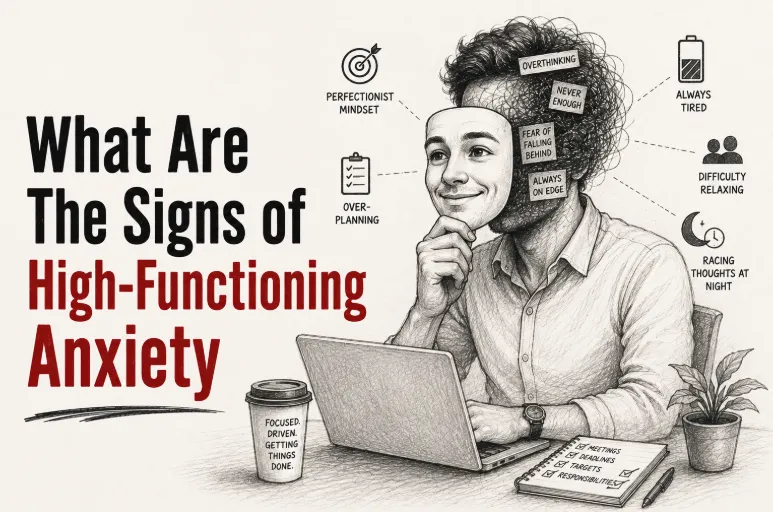

- Signs of high functioning anxiety can be difficult to recognize because they often look like ambition, productivity, perfectionism, and responsibility. You may appear successful and completely in control while constantly dealing with overthinking, worry, mental exhaustion, and difficulty relaxing. Understanding these signs can help you recognize when everyday pressure may be affecting your well-being.Hidden Behind Success: High-functioning anxiety often looks like ambition, reliability, and productivity, making it difficult to recognize even though the mind remains in a constant state of worry and alertness.
- The Patterns That Keep It Hidden: Overthinking, perfectionism, people-pleasing, guilt around rest, and using work as an escape are common signs that persistent anxiety may be driving everyday behaviour.
- The Cost of Staying in Survival Mode: Left unaddressed, high-functioning anxiety can gradually affect energy, sleep, physical health, relationships, focus, and overall quality of life, even while outward success continues.
- Recovery Starts With Awareness: Recognizing unhealthy patterns, supporting your nervous system, reducing mental overload, and seeking professional help when needed can help you regain energy, improve recovery, and build a healthier relationship with work and life.
A business owner can finish every meeting, clear the inbox, spend time with family, and still lie awake at night replaying conversations, planning tomorrow, and preparing for problems that haven’t happened. Anxiety doesn’t always look like panic. Sometimes, it looks like productivity, overthinking, and always needing to stay in control.
Having worked with more than 1,000 business owners and professionals, Kapiil Gupita has seen this pattern repeatedly. People who seem successful and composed on the outside may be carrying constant mental pressure within. In this blog, we’ll explore the signs of high-functioning anxiety, how it differs from everyday stress, and what you can do about it.
What Is High-Functioning Anxiety?
High-functioning anxiety is a term used to describe people who appear calm, capable, and successful on the outside while constantly battling worry and mental pressure on the inside. It is important to understand that high-functioning anxiety is not an official mental health diagnosis. Instead, it describes a pattern of thoughts and behaviours where someone continues performing well at work, managing responsibilities, and meeting expectations despite experiencing persistent anxiety. Because they continue functioning normally, the signs are often overlooked by others and even by the person experiencing them.
People with high-functioning anxiety often don’t realize that what they’re experiencing isn’t “normal stress.” Their mind remains active long after the workday ends, making it difficult to truly relax.
Research suggests that chronic anxiety can keep the body’s stress response activated, meaning the nervous system spends extended periods in a heightened state even when there is no immediate threat. Over time, this can affect much more than mental well-being. It may contribute to poor sleep, low energy, digestive issues, difficulty concentrating, muscle tension, and slower recovery from everyday stress.
Having worked with more than 1,000 business owners and professionals, Kapiil Guptta has noticed that very few people describe themselves as anxious. Instead, they often say, “I don’t feel anxious. I just can’t switch my brain off.” They mistake constant mental activity for ambition, discipline, or responsibility because it has become part of their identity. It is also important to remember that anxiety exists on a spectrum, and not everyone who experiences these signs has an anxiety disorder. If persistent worry begins interfering with your work, relationships, sleep, or overall quality of life, it is important to seek an assessment from a qualified mental health professional.
Key Differences: HFA vs. GAD vs. Normal Stress
Many people use the terms stress and anxiety interchangeably, but they are not the same. Stress is a normal response to a challenge, while anxiety is a feeling of excessive worry that may continue even when the stressful situation has passed. High-functioning anxiety sits somewhere in between. People often appear productive and successful, making it easy to mistake persistent anxiety for ambition or a strong work ethic. Understanding these differences can help you recognize when it’s time to seek support instead of simply pushing through.
| Factor | Normal Stress | High-Functioning Anxiety (HFA) | Generalized Anxiety Disorder (GAD) |
| What triggers it? | A specific situation like a deadline, exam, or financial challenge. | May begin with a trigger but often continues even after the situation is over. | Worry is excessive, persistent, and often not linked to one specific event. |
| Duration | Usually temporary and improves when the problem is resolved. | Ongoing pattern that becomes part of daily life. | Persistent for months and meets clinical diagnostic criteria. |
| Daily functioning | Temporary impact on performance. | Person continues to perform well despite internal distress. | Can significantly interfere with work, relationships, and daily activities. |
| Thought patterns | Focused on the current challenge. | Constant overthinking, planning, and expecting worst-case scenarios. | Excessive worry across multiple areas of life that is difficult to control. |
| Physical symptoms | Short-term headaches, muscle tension, or poor sleep. | Frequent fatigue, digestive issues, poor sleep, racing heart, or muscle tightness. | Similar physical symptoms but often more persistent and distressing. |
| How others see it | Noticeable during stressful periods. | Often seen as hardworking, disciplined, or ambitious. | Symptoms may become more visible because they affect daily functioning. |
| Professional diagnosis | Not a mental health disorder. | Not an official medical diagnosis. | A recognized anxiety disorder diagnosed by a qualified mental health professional. |
Why High-Functioning Anxiety Often Goes Unnoticed
One of the biggest reasons high-functioning anxiety remains unnoticed is that it rarely looks like the anxiety people see in movies or on social media. Instead of panic attacks or obvious distress, it often appears as ambition, discipline, reliability, and success. Many people continue performing well at work and fulfilling their responsibilities, making it difficult for others, and even themselves, to recognize that something is wrong.
Work Rewards Constant Pressure
In today’s world, being busy is often seen as a sign of success. Long working hours, answering emails late at night, skipping vacations, and constantly being available are frequently praised rather than questioned. Hustle culture has blurred the line between healthy ambition and chronic stress, making it easy to believe that exhaustion is simply part of achieving more.
Research on workplace culture suggests that productivity is often rewarded more than recovery, encouraging people to stay constantly engaged even when they need rest. Over time, this pressure becomes part of a person’s identity. They stop seeing themselves as someone who is struggling and start believing they are simply “driven.” As a result, they ignore early warning signs until their health begins to suffer.
Success Can Hide Anxiety
People often assume that someone with a thriving business, a successful career, or multiple achievements must also be emotionally healthy. The reality is that external success does not always reflect internal well-being. Many high achievers become experts at hiding their worries because they continue meeting deadlines, making decisions, and delivering results despite feeling mentally exhausted.
Many high performers that work with Kapiil Guptta, delay seeking help because everyone around them believes they are doing well. Their colleagues admire their discipline, their family sees their achievements, and their clients trust their confidence. Since no one notices the mental pressure they carry every day, they convince themselves that asking for help would mean they are weak or incapable.
Family Expectations Make It Harder
For many people in India, responsibilities extend far beyond their careers. They may be supporting parents, raising children, managing finances, or running a family business. Being dependable becomes part of their identity, and they feel responsible for staying strong regardless of how they feel internally.
Many people avoid talking about their anxiety because they don’t want to worry their parents, burden their spouse, or appear incapable in front of their family. Emotional struggles are often dismissed as temporary stress or overthinking, making conversations about mental health difficult. Kapiil Guptta has seen that many business owners openly discuss declining profits or physical pain but hesitate to admit they feel mentally overwhelmed. This silence allows high-functioning anxiety to continue unnoticed until it begins affecting sleep, energy, relationships, and long-term health.
The 10 Signs of High-Functioning Anxiety You Shouldn’t Ignore
High-functioning anxiety doesn’t always look the way people expect. Instead of panic attacks or obvious distress, it often hides behind productivity, perfectionism, and the ability to keep going despite feeling mentally exhausted. Because these behaviours are frequently praised, many people dismiss them as personality traits rather than signs of chronic stress. While experiencing these patterns doesn’t necessarily mean you have an anxiety disorder, recognizing them can help you understand when your mind and body may be asking for support. These are 10 signs of high-functioning anxiety you shouldn’t ignore:
1. Your Mind Never Takes a Break
Many people with high-functioning anxiety don’t look worried, but their mind rarely experiences silence. Even after finishing one task, it immediately jumps to the next responsibility or possible problem.
What it looks like:
- Replaying conversations long after they end.
- Imagining worst-case scenarios.
- Planning tomorrow before today is over.
- Constantly thinking about things you might have forgotten.
- Feeling mentally tired despite not doing physical work.
The brain starts believing that staying alert is the safest way to prevent failure or disappointment. Over time, worrying becomes automatic, making it difficult to enjoy the present moment even when everything is going well.
2. Everything Has to Be Perfect
People with high-functioning anxiety often believe that making mistakes is unacceptable. They spend far more time refining details than necessary because “good enough” never feels good enough.
What it looks like:
- Checking emails multiple times before sending.
- Delaying projects until everything feels perfect.
- Struggling to delegate work.
- Feeling anxious over small mistakes.
- Believing every task reflects your worth.
Perfectionism is often driven by fear rather than excellence. Research shows that maladaptive perfectionism is associated with higher levels of anxiety because self-worth becomes closely tied to performance and external validation.
One business owner who worked with Kapiil Guptta delayed launching a new service for months because every presentation, document, and process had to feel “ready.” Once he understood that perfection was protecting him from the fear of criticism rather than improving his business, he was able to move forward with greater confidence and less mental pressure.
3. You Say Yes Even When You Want to Say No
Many people with high-functioning anxiety struggle to set boundaries because disappointing others feels worse than overloading themselves.
What it looks like:
- Taking on extra work despite feeling exhausted.
- Agreeing to plans you don’t enjoy.
- Feeling guilty when saying no.
- Prioritizing everyone else’s needs before your own.
- Rarely asking for help.
This behaviour is often linked to fear of rejection or criticism. Saying yes provides temporary relief from guilt, but repeatedly ignoring personal boundaries increases stress, fatigue, and emotional exhaustion.
4. Your Body Keeps Sending Signals
Anxiety doesn’t only affect the mind. When stress continues for weeks or months, the body often starts communicating what the mind has been ignoring.
What it looks like:
- Frequent headaches.
- Digestive discomfort or bloating.
- Tight shoulders or neck pain.
- Jaw clenching.
- Constant fatigue despite sleeping.
Chronic activation of the body’s stress response can affect digestion, muscle tension, recovery, and energy levels. Many physical symptoms that people blame on a “busy lifestyle” may actually be signs that the nervous system has remained under pressure for too long.
5. Rest Makes You Feel Guilty
For someone with high-functioning anxiety, rest can feel uncomfortable instead of refreshing. Even during downtime, the mind searches for something productive to do.
What it looks like:
- Feeling guilty on weekends.
- Checking work messages during vacations.
- Struggling to watch a movie without reaching for your phone.
- Feeling anxious when your schedule is empty.
- Believing you should always be doing something.
The body may be sitting on the couch, but the mind continues working. This constant mental activity prevents genuine recovery and can leave people feeling tired even after taking time off.
6. You Wake Up Thinking
Many people assume anxiety only affects them during the day, but it often continues throughout the night.
What it looks like:
- Waking up in the middle of the night.
- Thinking about tomorrow before getting out of bed.
- Mentally solving work problems while trying to sleep.
- Feeling exhausted despite spending enough hours in bed.
- Starting the day feeling mentally drained.
Stress hormones such as cortisol naturally rise in the morning to help us wake up. However, prolonged stress and anxiety can disrupt healthy sleep patterns, making it harder for the mind and body to recover overnight.
Kapiil Guptta often hears founders say, “I wake up tired before my day has even started.” They assume they need more motivation or coffee, when the real issue is that their brain never truly switched off during the night.
7. You’re Always Afraid of Disappointing Someone
People with high-functioning anxiety often carry a constant sense of responsibility for how others feel.
What it looks like:
- Fear of criticism.
- Constantly seeking reassurance.
- Feeling responsible for everyone’s expectations.
- Apologizing even when you haven’t done anything wrong.
- Worrying about letting people down.
This pattern usually develops because approval feels linked to safety or self-worth. Instead of making decisions based on personal priorities, people begin making decisions to avoid disappointing others.
8. Small Things Trigger Big Reactions
Sometimes anxiety doesn’t look like worry. It looks like impatience, frustration, or emotional exhaustion.
What it looks like:
- Losing patience quickly.
- Becoming irritated over small delays.
- Feeling emotionally drained.
- Snapping at family members.
- Feeling overwhelmed by minor inconveniences.
When the nervous system remains under pressure for long periods, it becomes more reactive. Small everyday situations begin to feel much bigger because the mind has very little emotional capacity left.
9. Work Becomes Your Escape
Keeping yourself busy can temporarily distract you from anxious thoughts. The problem is that distraction doesn’t solve the underlying cause.
What it looks like:
- Working long after your workday ends.
- Feeling uncomfortable with free time.
- Depending on caffeine to keep going.
- Using alcohol or nicotine to unwind.
- Endless scrolling when your mind feels overwhelmed.
Many coping mechanisms provide short-term relief but don’t reduce anxiety. Over time, overworking, excessive caffeine, alcohol, nicotine, or constant phone use can become habits that mask stress rather than address it.
Kapiil Guptta has worked with business owners who believed working harder would eventually reduce their stress. Instead, the opposite happened. The more they relied on work to escape anxious thoughts, the more exhausted they became. It wasn’t until they improved their recovery, sleep, and daily routines that they realized work had become a coping mechanism instead of just a career.
10. You Keep Saying “I’m Fine”
Perhaps the biggest sign of high-functioning anxiety is that everything appears normal from the outside. Your career is progressing, your responsibilities are being handled, and people admire how well you manage everything.
What it looks like:
- Saying “I’m fine” even when you feel overwhelmed.
- Looking calm while constantly worrying internally.
- Feeling like you’re barely keeping everything together.
- Believing everyone else has it figured out.
- Ignoring your own mental and physical needs.
Many people don’t recognize how much anxiety has affected them until they begin sleeping better, thinking more clearly, and feeling genuinely rested again. What once felt like their normal way of living was actually a constant state of mental overdrive. This is often the point where they realize that surviving each day isn’t the same as living it well.
What Happens If High-Functioning Anxiety Continues?
High-functioning anxiety may not seem like a serious problem at first because you continue meeting deadlines, running your business, and managing everyday responsibilities. However, when your mind remains under constant pressure for months or years, the effects can gradually extend beyond your thoughts. What begins as occasional overthinking can slowly influence your energy, physical health, relationships, and overall quality of life.
Your Energy Slowly Disappears
One of the earliest consequences of prolonged anxiety is a steady decline in energy. Even after a full night’s sleep, you may wake up feeling mentally exhausted because your brain has spent so much time in a state of constant alertness.
You may notice these five things:
- Feeling mentally tired early in the day.
- Difficulty concentrating on important tasks.
- Decision fatigue from making even simple choices.
- Reduced creativity and problem-solving ability.
- Burnout despite continuing to perform well.
When the brain rarely gets an opportunity to recover, it becomes harder to focus, make decisions, and stay productive. Many people assume they need more motivation or caffeine, when what they actually need is better recovery.
Your Body Starts Paying the Price
The mind and body are closely connected. Chronic stress and anxiety don’t just affect how you think. They can also influence how your body functions over time. Research suggests that prolonged activation of the body’s stress response is associated with a wide range of physical health concerns.
Seven common effects include:
- Poor sleep quality.
- Higher blood pressure.
- Digestive problems such as bloating or acidity.
- Increased muscle tension and persistent fatigue.
- Chronic inflammation.
- Hormonal imbalances.
- A weakened immune response.
High-functioning anxiety does not directly cause these conditions on its own, but prolonged stress can contribute to changes in sleep, recovery, eating habits, and inflammation that may increase the risk of developing or worsening certain health problems.
Relationships Also Suffer
When your mind is constantly occupied, it becomes difficult to be fully present with the people around you. Even if you’re physically at home, part of your attention may still be focused on tomorrow’s meeting, an unfinished task, or a problem at work.
Over time, you may notice these five things:
- Becoming less patient with loved ones.
- Feeling emotionally distant.
- Prioritizing work over family time.
- Finding it difficult to enjoy conversations.
- Feeling guilty for not being fully present.
Many people believe they are working hard for their family, but chronic anxiety can quietly reduce the quality of the time they spend together. This emotional distance often develops gradually, making it difficult to recognize until relationships begin to feel strained.
How to Manage High-Functioning Anxiety
Managing high-functioning anxiety isn’t about becoming less ambitious or productive. It’s about helping your mind and body recover from constant pressure so you can perform well without sacrificing your health. While there is no single solution that works for everyone, small and consistent changes can make a meaningful difference over time.
Start by Recognizing the Pattern
The first step is acknowledging that constantly feeling “on” isn’t something you have to accept as normal. Many people with high-functioning anxiety become so used to overthinking and staying busy that they stop noticing how much it affects their daily life. Awareness helps you identify the habits that keep your nervous system under constant pressure.
Start paying attention to these six patterns:
- When your anxiety feels strongest.
- Situations that trigger overthinking.
- Your sleep quality each night.
- Your daily energy levels.
- Changes in your mood.
- Physical symptoms such as headaches or digestive discomfort.
Keeping a simple journal for a few weeks can help you connect your thoughts, behaviours, and physical symptoms. Once you understand your patterns, it becomes much easier to make meaningful changes.
Regulate Your Body First
When your nervous system has been under stress for a long time, trying to “think your way out” of anxiety is rarely enough. Before expecting your mind to feel calmer, it helps to give your body signals that it is safe to slow down.
Six simple habits that support nervous system regulation include:
- Practising slow, controlled breathing.
- Getting morning sunlight soon after waking.
- Moving your body through walking or exercise.
- Following a consistent sleep routine.
- Eating balanced meals instead of skipping them.
- Limiting caffeine later in the day if it worsens anxiety.
These habits won’t eliminate anxiety overnight, but they can help reduce your body’s stress response, improve recovery, and make it easier to manage anxious thoughts.
Reduce Mental Load Instead of Increasing Motivation
Many people believe they need more discipline or motivation when, in reality, they need fewer unnecessary decisions. Every decision you make throughout the day uses mental energy. When your brain is already overloaded, simplifying daily life can be more effective than trying to push yourself harder.
Five ways you can reduce your mental load:
- Creating routines for repetitive tasks.
- Setting clear work and personal boundaries.
- Delegating responsibilities whenever possible.
- Scheduling breaks and recovery like any other important meeting.
- Limiting unnecessary decisions throughout the day.
After working with more than 1,000 business owners, Kapiil Guptta has found that improving recovery often has a greater impact than simply increasing productivity. When your mind has fewer decisions to make and more opportunities to recover, it becomes easier to focus on what truly matters.
Conclusion
High-functioning anxiety often hides behind qualities that society admires, including ambition, discipline, responsibility, and the ability to keep going no matter what. Because life appears to be under control on the outside, the warning signs are easy to dismiss until they begin affecting your energy, sleep, relationships, and overall health. Recognizing these patterns early gives you the opportunity to make meaningful changes before chronic stress takes a bigger toll on your well-being.
If you constantly feel mentally overloaded, struggle to recover despite getting enough rest, or notice your energy declining even though everything seems “fine,” don’t ignore what your mind and body are trying to tell you. Speaking with a qualified mental health professional can help you understand what you’re experiencing and identify the right support. At WAYDA, Kapiil Guptta and his team have worked with more than 1,000 business owners and professionals, helping them improve their sleep, recovery, energy, and daily routines as part of a comprehensive approach to health. While mental health conditions should always be evaluated and treated by qualified professionals, supporting the body through better recovery, nutrition, movement, and sustainable habits can play an important role in improving overall well-being.
Frequently Asked Questions
What is high-masking anxiety?
Another term you might hear is “high-masking anxiety.” “This really speaks to the effort someone with anxiety is putting in to appear that everything is OK,”
What does high anxiety look like?
High anxiety looks like a mix of intense worry, racing thoughts, and strong body signals like a fast heartbeat or shaking. It can make people feel completely overwhelmed, tense, or unable to sit still.
Is high-functioning anxiety real?
Yes, high-functioning anxiety is a real and common internal experience, characterized by constant overthinking, perfectionism, and hidden exhaustion, even though a person looks successful on the outside.
What vitamin deficiency causes anxiety?
Anxiety is linked to deficiencies in Vitamin D and B-complex vitamins (specifically B12, B6, and folate), which help regulate brain chemicals and the nervous system.
What is the most serious type of anxiety?
While no single form is universally labeled the absolute worst, Panic Disorder, Agoraphobia, and severe Obsessive-Compulsive Disorder (OCD) are widely considered by experts to be the most intense and debilitating types. Each person experiences severity differently, but these conditions create extreme distress and disrupt daily life.
How to tell if someone has high-functioning anxiety?
High-functioning anxiety features constant overthinking, extreme perfectionism, and trouble relaxing. While people with this condition appear successful and calm on the outside, they struggle with inner dread and exhaustion. It is not a formal medical diagnosis, but rather a pattern tied to generalized anxiety.
Read More: The Truth About Intermittent Fasting for Indians
Follow Kapiil Gupta on Instagram for practical health tips, executive wellness strategies, and evidence-based guidance to improve your energy, leadership, and business performance.
Instagram: https://instagram.com/kapiilguptta

Leave a Reply