

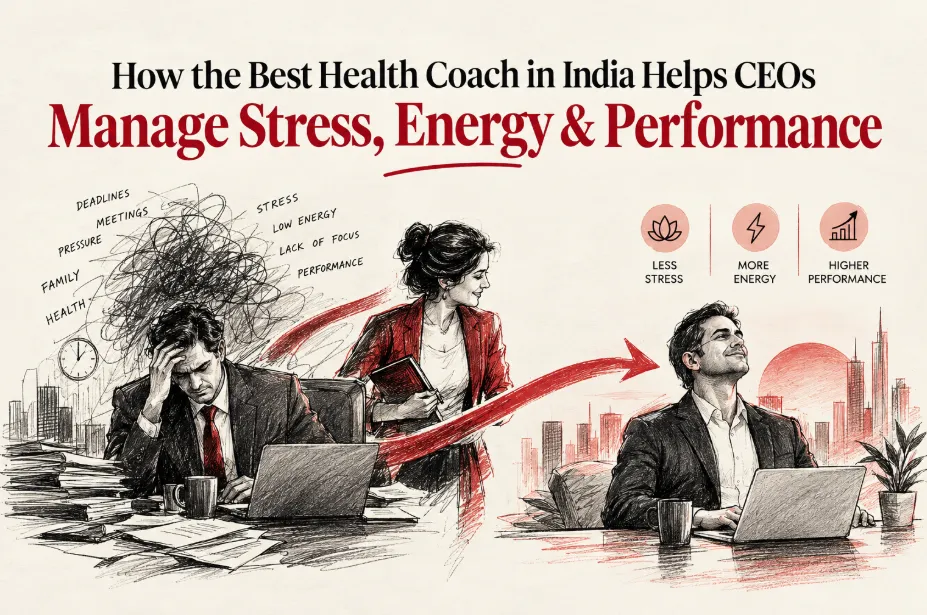

How the Best Health Coach in India Helps CEOs Manage Stress, Energy & Performance
Running a business demands constant attention, quick decisions and the ability to manage pressure without losing focus. For CEOs, finding the best health coach in India may be one step towards understanding how work demands affect stress, energy, sleep and recovery. Personalised health coaching can help business leaders develop practical habits that fit around professional commitments and support long-term well-being.
- Stress Can Follow You Beyond Work: Business responsibilities can make it difficult to switch off, recover properly and protect time for personal health.
- Busy Schedules Disrupt Healthy Habits: Unpredictable meetings, travel and late-night work can affect sleep, energy and consistency, even when you know what healthy living requires.
- Personalised Coaching Turns Intentions Into Habits: Understanding stress triggers and adapting sleep, nutrition, movement and recovery routines to real-life demands makes health goals more manageable.
- Progress Means Sustainable Self-Management: Tracking habits and energy, adjusting goals and learning to handle setbacks help CEOs build routines they can maintain as business demands change.
Running a business demands constant attention, quick decisions and the ability to manage pressure without losing focus. For many CEOs, maintaining their own health becomes difficult when meetings, deadlines and responsibilities take priority. Over time, inconsistent sleep, low energy and ongoing stress can affect how they feel and function throughout the day.
The right health coach can help CEOs understand what is affecting their well-being and build practical habits around their professional commitments. In this blog, we will explore how health coaching can help business leaders manage stress, improve daily energy and develop consistent routines that support their health over the long term.
What Is Your Business Costing Your Health?
Your mornings may begin with urgent calls, your afternoons may disappear into meetings, and your evenings may be spent catching up on unfinished work. Amid these responsibilities, sleep, exercise, regular meals and personal time can easily take a back seat.
You may continue meeting business targets while feeling increasingly tired, struggling to maintain healthy habits and relying on caffeine or sheer willpower to get through the day. The challenge is finding a way to grow your business without neglecting the health and energy that help you keep going.
Focus and Decision-Making
Running a business requires clear thinking, problem-solving and consistent decision-making. However, insufficient sleep can impair sustained attention and make it harder to concentrate during meetings or evaluate important decisions. You may find yourself rereading emails, losing focus during conversations or feeling mentally drained by tasks that once felt manageable. Prioritising adequate rest can help support the concentration your role demands.
Physical Health
When work takes priority, healthy routines are often the first to go. You might skip breakfast before an early meeting, spend hours sitting at your desk, eat at irregular times or postpone exercise because something more urgent needs your attention. Over time, these patterns can make it harder to maintain your energy and overall well-being. Building simple, realistic habits into your working day can help you look after your health without disrupting your schedule.
Personal Life
Finishing work does not always mean switching off from it. You may reach home while still thinking about an unresolved business problem, checking messages during dinner or planning the next day’s priorities instead of spending quality time with your family. Weekends can become extensions of the working week, leaving little room for hobbies, relationships or genuine rest. Making space for life outside your business is just as important as making time for the business itself.
Exhaustion Becomes Normal
Perhaps the most concerning pattern is gradually accepting tiredness and constant stress as part of being successful. You may tell yourself that you will exercise when work slows down, sleep better after the next deadline or take a break once a major target is achieved. But there is always another meeting, another decision or another milestone to reach. Research involving self-employed individuals in Germany found an association between higher work demands and mental exhaustion, reinforcing the importance of paying attention to your well-being.
Why CEOs Struggle With Stress, Energy and Consistency
For many CEOs, responsibilities leave limited time for personal health. Even when they understand the importance of exercise, sleep and balanced nutrition, maintaining these habits becomes difficult when business demands keep changing. Over time, stress and inconsistent routines can affect how they feel and function throughout the day.
The Pressure Never Really Switches Off
Business responsibilities can continue occupying your mind long after the working day ends. You may find yourself thinking about an important decision during dinner, reviewing unfinished work late at night or worrying about a challenge that needs attention the following morning. When your mind remains occupied with work, switching off and making time for recovery can become difficult.
- Mental fatigue: Repeated decision-making and ongoing responsibilities can leave you feeling mentally drained.
- Disrupted recovery: Work-related thoughts late at night may make it harder to unwind and maintain a consistent sleep routine.
- Persistent stress: When stress begins affecting your sleep, mood or everyday functioning, professional support may be helpful.
Occasional stress is a normal part of managing responsibility, but persistent symptoms deserve attention. Recognising when pressure is affecting your well-being can help you take appropriate steps before exhaustion becomes something you consider unavoidable. If symptoms continue or interfere with daily life, consult a qualified healthcare professional.
One of Kapiil Guptta’s clients, Rohit, was struggling with low energy while managing his professional responsibilities. Like many business owners, he had to balance the demands of work with his own health, making it difficult to understand what was affecting his energy and how to address it consistently. Through health and performance coaching, the focus was on understanding his lifestyle and identifying practical changes that could fit into his daily routine.
Schedule Leaves Little Room For Health
A CEO’s day may begin with an early meeting, continue with client discussions over lunch and fill up with calls, employee concerns and unexpected decisions. Business travel can disrupt familiar routines, while unfinished work may push the evening well beyond the planned finishing time. When the schedule is unpredictable, following a rigid health routine can become difficult, even when the intention to stay healthy is genuine.
- Missed workouts: Meetings and urgent tasks can replace the time you planned for exercise.
- Irregular meals: Back-to-back calls, client lunches and travel can disrupt meal timings.
- Limited rest: Late-night work can reduce the time available for sleep and recovery.
A more practical approach includes alternatives for days when the original plan is no longer possible. You might choose a shorter movement session when time is limited or prepare for meal choices before travelling. These adjustments help you maintain some consistency without expecting every day to follow the same schedule. The goal is to build a routine that can adapt to your professional responsibilities.
A businessman from Delhi, wanted to pursue a marathon while managing the demands of running his business. Finding the time and consistency to work towards this goal was a challenge alongside his professional commitments. With guidance focused on integrating physical activity and health habits into his lifestyle, the aim was to make his fitness goal more manageable alongside work.
Motivation Keeps Disappearing
Starting a new health routine often feels exciting because the goals are clear and the commitment is fresh. You may decide to exercise every morning, improve your eating habits or follow a strict schedule. However, when business becomes demanding, these plans can quickly become difficult to maintain. Missing a few activities may lead to frustration, and eventually you may stop altogether, waiting for a quieter period or renewed motivation to begin again.
- Unrealistic expectations: Trying to change several habits at once can make the routine difficult to sustain.
- All-or-nothing thinking: Missing one workout or having an irregular day can make you feel that your entire effort has failed.
- Lack of flexibility: A plan that cannot accommodate travel, deadlines or unexpected meetings may break down when you need it most.
Consistency becomes easier when your health routine is designed around your actual life. Start with manageable actions and allow room for adjustments during demanding weeks. Instead of relying entirely on motivation, focus on habits you can return to even after a disruption. This creates a more sustainable way to look after your health while continuing to meet the responsibilities of running a business.
How a Health Coach Helps CEOs Improve Energy, Manage Stress and Enhance Performance
Long working hours, unpredictable schedules and limited time for personal health can make it difficult to maintain consistently. A health coach helps CEOs understand their health patterns and build practical habits that fit around their professional responsibilities.
Helping Manage Stress
Managing stress requires understanding what triggers it and finding ways to respond more effectively. A health coach can help CEOs recognise recurring patterns and identify practical changes that fit their working lives.
- Identify stress triggers: Recognise situations that increase pressure, such as back-to-back meetings, tight deadlines or unresolved work that carries into the evening.
- Develop practical coping strategies: Introduce manageable techniques, such as breathing exercises, short breaks and movement, to create opportunities to pause during demanding days.
- Establish healthier boundaries: Identify opportunities to reduce unnecessary interruptions and protect time for rest and personal commitments.
For example, if work messages regularly extend into the evening, adjusting availability and creating a realistic wind-down routine may help. The approach depends on the individual’s responsibilities, challenges and circumstances.
Research supports exploring structured approaches to stress management. A 2025 systematic review and meta-analysis of 25 studies involving 2,466 supervisors found potential benefits from workplace stress-management interventions, particularly for mental health.
Helping Improve Daily Energy
Feeling tired throughout the day can affect concentration, productivity and the ability to manage demanding responsibilities. A health coach helps CEOs review their daily habits and identify patterns that may be contributing to low energy.
- Understand energy patterns: Identify when fatigue tends to occur, such as after lunch, during long meetings or towards the end of the working day.
- Improve sleep routines: Develop realistic bedtime habits and create opportunities for adequate rest, even during demanding workweeks.
- Build better eating habits: Plan balanced meals and practical food choices that accommodate meetings, travel and unpredictable schedules.
- Incorporate movement: Introduce short walks, movement breaks and other manageable activities throughout the day.
The objective is to create a flexible routine rather than depend on a perfect schedule. Persistent or unexplained fatigue should be assessed by a qualified healthcare professional rather than automatically attributed to work or lifestyle.
Helping Enhance Focus and Performance
CEOs regularly make decisions, solve problems and manage people, often under considerable pressure. Supporting health-related habits can help create better conditions for concentration and consistent performance.
- Support cognitive performance: Prioritise adequate sleep and regular recovery, both of which are important for sustained attention.
- Improve daily routines: Identify habits that interfere with concentration, including irregular sleep, insufficient breaks and inconsistent meals.
- Build consistency: Establish manageable health rituals that can be maintained across busy workdays, travel and changing schedules.
- Review progress: Track relevant changes in energy, sleep, concentration and daily habits, adjusting the approach when necessary.
A personalised plan helps connect health goals with the realities of running a business, making it easier to work towards sustainable improvements instead of relying on short-term motivation.
Helping With Recovery
Recovery is not limited to getting enough sleep. It also involves creating opportunities to disconnect from work, recharge and maintain a healthier balance between professional and personal responsibilities.
- Create a wind-down routine: Establish a manageable transition between work and bedtime instead of carrying unfinished tasks into every evening.
- Protect personal time: Make room for family, relationships and activities outside the business.
- Adapt to changing schedules: Develop alternatives for travel days, busy periods and weeks when normal routines are difficult to maintain.
- Recognise when additional support is needed: Persistent sleep difficulties, significant stress or ongoing fatigue may require assessment by a qualified healthcare professional.
What a Health Coach Actually Does (That a Gym, Doctor, or Executive Coach Can’t)
A CEO may have an executive coach to improve leadership, a doctor to address medical concerns and a trainer to support fitness goals. Yet connecting these different aspects of health to everyday habits can remain challenging. Health coaching focuses on that practical gap by helping individuals understand their routines, identify barriers and build sustainable changes around their professional responsibilities. It complements other forms of support rather than replacing them.
| Factor | Health Coach | Gym Trainer | Doctor | Executive Coach | Therapist |
| Primary focus | Sustainable health habits and behaviour change | Exercise, fitness and physical conditioning | Medical diagnosis, treatment and prevention | Leadership and professional performance | Emotional well-being and mental health |
| Typical approach | Personalised goals, habit-building and accountability | Workout plans and exercise guidance | Clinical assessment, investigations and treatment | Leadership development and structured coaching | Evidence-based psychological assessment and therapy |
| Sleep and daily energy | Helps improve routines and identify lifestyle patterns | May support exercise-related goals | Evaluates medical causes of fatigue or sleep problems | May address work habits affecting performance | Can help when psychological factors affect sleep or well-being |
| Stress management | Supports practical daily habits and coping routines | May incorporate exercise for general well-being | Assesses and treats relevant medical concerns | Helps manage workplace and leadership pressures | Addresses psychological distress and mental health concerns |
| Nutrition and movement | Supports sustainable habits within professional scope | Primarily focuses on exercise and fitness | Provides medical or dietary guidance within qualifications | Usually outside the main scope | Usually outside the main scope |
| Personalisation for CEOs | Adapts health habits to travel, meetings and work schedules | Adapts workouts to fitness goals and availability | Tailors care to medical needs | Tailors development to leadership challenges | Tailors therapy to the individual’s psychological needs |
| Accountability | Tracks health habits and progress towards goals | Tracks workouts and fitness progress | Monitors clinical outcomes where appropriate | Tracks leadership and professional goals | Reviews therapeutic goals and progress |
| When to seek support | When you need help building and maintaining healthier habits | When you need structured exercise guidance | When symptoms need medical assessment or treatment | When you want to develop leadership skills | When emotional distress or mental health concerns need professional support |
The key distinction: A health coach helps bridge the gap between knowing what supports your health and applying it consistently. Health coaching can complement medical care, fitness training, executive coaching and therapy, but it does not replace their specialised roles.
Conclusion
Running a business should not mean putting your health on hold. Start by identifying what is affecting your stress, energy and daily habits, then take practical steps to build a routine that fits your professional life. Your health deserves the same consistency and attention you bring to your business.
With personalised health and performance coaching, you can work towards managing stress, improving daily energy and building habits that last, even when business gets demanding. Take the first step towards making your health a priority with Kapiil Guptta, who works with business owners to help them build a healthier, more sustainable way of living.
FAQ
What is the 70/30 rule in coaching?
The 70/30 rule in coaching primarily refers to the guideline that the client should do about 70% of the talking, while the coach uses the remaining 30% to listen, ask targeted questions, reflect, and guide.
What is the difference between a health coach and a wellness coach?
A health coach focuses on physical health and managing specific medical conditions, while a wellness coach focuses on broad, whole-life balance and emotional well-being.
Read More: Decision Fatigue: Why Successful People Make Bad Decisions
Follow Kapiil Gupta on Instagram for practical health tips, executive wellness strategies, and evidence-based guidance to improve your energy, leadership, and business performance.
Instagram: https://instagram.com/kapiilguptta

Leave a Reply