

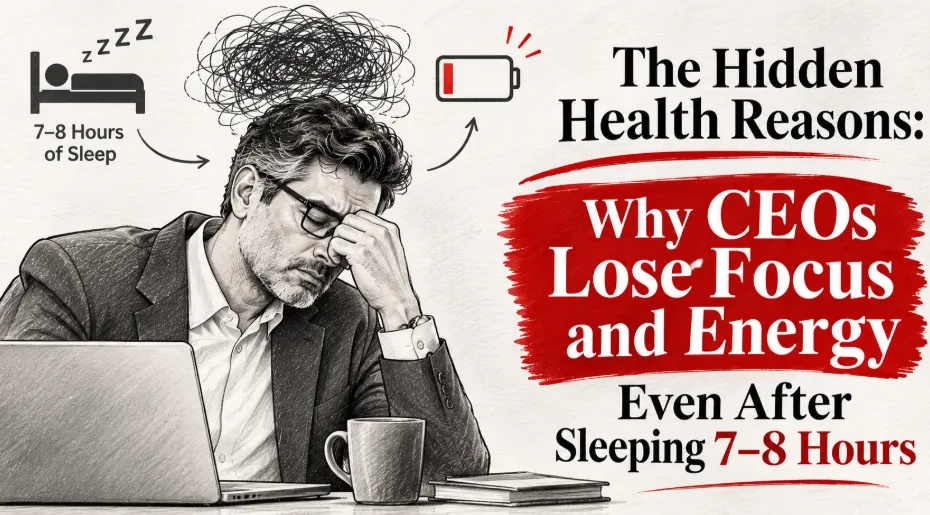

Why CEOs Feel Tired After 8 Hours of Sleep: 7 Hidden Reasons
Getting 7–8 hours of sleep does not always mean you wake up feeling refreshed and energetic. You may still experience constant tiredness, difficulty concentrating, brain fog, or a dependence on caffeine to get through the day. For many CEOs and business owners, these concerns are often dismissed as a normal consequence of demanding schedules. However, the real reasons may go beyond a lack of sleep and could be linked to poor sleep quality, ongoing stress, unhealthy daily habits, or underlying health conditions.
In this blog, you will explore the hidden reasons why you may continue experiencing low energy and poor focus even after getting sufficient sleep. You will also understand how these issues can affect your decision-making, work productivity, leadership, and personal life, along with practical ways to improve your sleep, recovery, and overall health.
- Sleep Duration Does Not Guarantee Recovery: Getting enough hours of sleep does not always mean your body and mind are fully rested. Poor sleep quality can leave you feeling tired, mentally drained, and unable to focus.
- Low Energy Has Multiple Underlying Causes: Stress, overthinking, fragmented sleep, unhealthy habits, medical conditions, excessive work pressure, digital distractions, and physical inactivity can all contribute to persistent fatigue.
- Fatigue Affects Business And Personal Life: Low energy can interfere with decision-making, work productivity, emotional control, leadership, and your ability to remain present in personal relationships.
- Sustainable Energy Starts With Understanding Your Health: Better sleep routines, stress management, reduced screen time, balanced nutrition, regular exercise, and investigating underlying health concerns can support long-term recovery and performance.
Why is 8 hours of sleep not enough?
Sleeping for 7–8 hours does not always mean your body has received adequate rest. Sleep duration and sleep quality are different. While sleep duration refers to the number of hours you sleep, sleep quality determines how well your body and brain recover during that time. Deep sleep supports physical recovery, while REM sleep helps with memory, learning, and emotional processing. Disruptions in these stages can leave you feeling exhausted despite spending enough hours in bed.
Poor sleep quality can show up in different ways. You may wake up several times during the night, struggle to fall asleep, wake up earlier than intended, or feel tired even after sleeping continuously. For CEOs, these patterns may be linked to work-related overthinking, financial concerns, irregular schedules, late-night screen exposure, and excessive caffeine consumption.
Sometimes, underlying sleep disorders such as sleep apnoea may also interrupt recovery without you realising it. This is why getting enough sleep is not always enough; the quality of your sleep matters just as much.
7 Causes Of Low Energy and Focus Even after good sleep
1. Constant Overthinking And Stress
You may be thinking about an upcoming financial commitment, an unresolved employee issue, a difficult client conversation, or a decision that needs your attention the next morning. Even when you are physically at home, your mind may remain occupied with situations you cannot immediately resolve.
This ongoing mental activity can make it difficult to transition into sleep. Repeatedly revisiting stressful situations may keep you mentally alert, delay the time it takes to fall asleep, or make it harder to return to sleep after waking up. When this becomes a regular pattern, you may begin the next day without feeling mentally refreshed.
Here are four ways persistent stress and overthinking can interfere with your sleep and recovery:
- Difficulty Switching Off: You continue mentally planning, analysing, or rehearsing work-related conversations even when there is nothing more you can do that night.
- Anticipatory Anxiety: You feel tense about upcoming responsibilities before they have even occurred, making it harder to relax.
- Nighttime Problem-Solving: You find yourself trying to resolve business challenges in your head instead of allowing your mind to rest.
- Emotional Carryover: Frustration or worry from the working day follows you into your personal time and affects your ability to unwind.
Over time, poor sleep and unresolved stress can reinforce each other. You may feel less patient, less focused, and less equipped to manage the pressures of the following day, which can create further stress.
A systematic review and meta-analysis examining worry, rumination, and sleep in non-clinical populations found that repetitive negative thinking was associated with poorer sleep quality, shorter sleep duration, and longer time taken to fall asleep. This suggests that repeatedly thinking about stressful situations can be one factor contributing to sleep difficulties.
2. Fragmented Sleep Patterns
Getting seven or eight hours of sleep does not necessarily mean that your sleep has been restorative. You may spend enough time in bed but experience repeated interruptions that prevent you from moving smoothly through the different stages of sleep. Some awakenings are brief enough that you may not remember them the following morning, yet frequent disruptions can still affect how rested you feel.
Sleep fragmentation can be associated with medical conditions, physical discomfort, environmental disturbances, and certain lifestyle factors. Sleep apnoea is one important example. It can cause repeated interruptions in breathing during sleep, sometimes accompanied by brief awakenings that the person may not consciously remember. Identifying the reason for disrupted sleep is more useful than simply increasing the number of hours spent in bed.
Here are five factors that can interrupt continuous sleep:
- Obstructive Sleep Apnoea: Repeated narrowing or blockage of the airway can interrupt breathing and disrupt normal sleep.
- Frequent Nighttime Urination: Waking repeatedly to use the bathroom can break up sleep and make it harder to feel refreshed.
- Restless Legs Or Physical Discomfort: Uncomfortable sensations, pain, or the urge to move can make it difficult to remain asleep.
- Environmental Disturbances: Noise, excessive room temperature, light, or an uncomfortable mattress can interrupt sleep.
- Medication And Substance Effects: Certain medicines, alcohol, and other substances can affect sleep continuity and quality.
When sleep is repeatedly interrupted, you may experience daytime sleepiness, slower responses, reduced alertness, and difficulty maintaining concentration during important meetings. If you regularly wake up unrefreshed or experience symptoms such as loud snoring and gasping during sleep, consider discussing them with a healthcare professional.
3. Unhealthy Daily Habits
Your daily routine has a direct influence on how well your body prepares for rest and recovers from the demands of the day. As a CEO, you may have to manage unpredictable schedules, frequent travel, long meetings, and responsibilities that extend into the evening. When your routine revolves entirely around business commitments, habits such as late-night eating, excessive caffeine consumption, and inconsistent sleep timings can gradually become normal.
The difficulty is that these habits often provide short-term convenience while making it harder to maintain consistent energy and recovery. For example, you may use coffee to overcome afternoon fatigue, skip a proper meal because of a meeting, and then work late because you feel you have not completed enough during the day.
Here are five everyday habits that may gradually affect your sleep and energy:
- Late-Night Eating: Eating large or heavy meals close to bedtime may cause digestive discomfort and make it harder to settle down.
- Dependence On Caffeine: Repeatedly using tea, coffee, or energy drinks to overcome tiredness may interfere with sleep, especially when consumed later in the day.
- Irregular Meal Timing: Frequently delaying meals can make it harder to maintain a consistent eating routine around your work schedule.
- Insufficient Daytime Movement: Spending most of the day sitting can reduce opportunities to maintain physical activity and fitness.
- Inconsistent Bedtimes: Frequently changing your sleep schedule can make it harder to establish a predictable sleep-wake rhythm.
A business owner who frequently travelled for meetings was relying on several cups of coffee to stay alert, eating dinner late, and sleeping at inconsistent times. Kapiil Guptta helped him review the daily habits contributing to his low energy and develop a more manageable routine around meals, caffeine, movement, and sleep. As he worked towards maintaining these changes, he reported feeling more consistent in his daytime energy and better able to manage his work schedule.
4. Underlying Medical Conditions
Persistent tiredness and brain fog are not always caused by stress, poor sleep, or an exhausting work schedule. Sometimes, they may be symptoms of an underlying medical condition that affects metabolism, hormone production, oxygen delivery, or the body’s ability to recover. These conditions can develop gradually, which means you may adjust your routine around the fatigue without recognising that something else could be contributing to it.
For business owners, this can be particularly challenging because exhaustion is often treated as a normal consequence of working long hours. However, continuing to push through persistent symptoms without understanding their cause may delay appropriate care. A medical assessment can help determine whether your fatigue is linked to a health condition, medication, sleep disorder, or another factor.
Here are five medical conditions that healthcare professionals may consider when investigating persistent fatigue:
- Hypothyroidism: An underactive thyroid can slow several bodily processes and contribute to tiredness, weight changes, and difficulty concentrating.
- Iron Deficiency And Anaemia: Low iron levels or reduced haemoglobin can affect oxygen delivery and contribute to weakness, breathlessness, and reduced stamina.
- Diabetes: Problems with blood glucose regulation can contribute to fatigue, increased thirst, frequent urination, and changes in energy.
- Sleep Apnoea: Repeated breathing interruptions during sleep can result in poor-quality rest and excessive daytime sleepiness.
- Other Chronic Conditions: Certain inflammatory, metabolic, and long-term health conditions can also contribute to persistent fatigue and reduced physical functioning.
Recognising these possibilities is important because each condition requires an appropriate assessment and, where necessary, specific treatment. If tiredness continues for several weeks, affects your daily activities, or occurs alongside other unexplained symptoms, consult a healthcare professional rather than assuming that lifestyle changes alone will resolve it.
The NHS identifies sleep apnoea, iron-deficiency anaemia, diabetes, and thyroid disorders among the possible causes of persistent tiredness. It also recommends medical evaluation when fatigue continues, affects daily life, or occurs alongside other symptoms. This reinforces the importance of investigating ongoing fatigue instead of automatically attributing it to work pressure.
5. Excessive Work Pressure
You may have to evaluate financial risks, manage employees, resolve operational problems, respond to clients, and make decisions that influence the future of the organisation. Unlike tasks that have a clear beginning and end, many business responsibilities remain ongoing, which can make it difficult to feel that the working day is ever truly complete.
When these demands continue without adequate breaks, your ability to maintain mental clarity may become affected. You might still attend meetings and complete essential tasks, but find it increasingly difficult to think through complex problems or give important decisions the attention they deserve. This mental load can also follow you home, leaving little time for genuine recovery.
Here are five aspects of business pressure that can contribute to mental fatigue:
- Responsibility Without Delegation: Holding on to every important task can leave you with very little time to recover or focus on high-priority work.
- Unpredictable Workdays: Last-minute meetings, urgent client requests, and unexpected operational issues can make it difficult to maintain a balanced routine.
- Limited Recovery Time: Moving directly from one responsibility to another without meaningful breaks can increase mental exhaustion.
- Pressure To Stay Available: Feeling that you must always be reachable can prevent you from mentally disconnecting from work.
- Unresolved Business Concerns: Ongoing financial, operational, or employee-related issues can continue occupying your attention outside working hours.
Eventually, you may find that even after completing a full day of work, you have little mental energy left for personal responsibilities or strategic thinking. The aim is not to eliminate business pressure, but to manage it in a way that leaves enough room for recovery and clear thinking.
6. Constant Digital Distractions
Digital devices have become essential to business operations. Emails, WhatsApp messages, video calls, project-management tools, and business updates help you communicate quickly and respond to changing priorities. However, when these notifications continue throughout the day, they can create a working environment in which your attention is repeatedly pulled away from the task in front of you.
The challenge is not simply the amount of time you spend on your phone or computer. It is also the frequency with which you interrupt one activity to check another. Even a short interruption can make it harder to return to a complex task because you need to recall where you left off and rebuild your concentration.
Here are five common digital behaviours that can fragment your attention:
- Checking Messages Automatically: Opening WhatsApp or email whenever you have a spare moment can turn brief pauses into repeated interruptions.
- Keeping Too Many Tabs Open: Moving between documents, dashboards, browser tabs, and communication tools can make it harder to maintain a clear train of thought.
- Responding Immediately To Every Alert: Treating every notification as urgent can prevent you from prioritising work according to its actual importance.
- Using Multiple Devices Simultaneously: Switching between your phone, laptop, and tablet can increase the number of competing information sources.
- Working Without Focused Time: Scheduling every part of the day around calls and messages leaves little uninterrupted time for complex work.
A business owner was constantly checking messages and responding to notifications, even while reviewing reports or preparing for important meetings. Kapiil Guptta helped him recognise how this pattern was affecting his focus and encouraged him to introduce dedicated periods for uninterrupted work, structured communication checks, and clearer boundaries around digital availability. By reducing unnecessary interruptions, he began creating more space for strategic tasks and focused decision-making.
7. Lack Of Physical Activity
A demanding business schedule can leave very little room for movement. You may spend most of your day sitting through meetings, travelling between locations, working at a desk, or attending calls. Over time, physical activity can become something you plan to do later rather than a regular part of your routine. This can gradually affect your cardiovascular fitness, muscle strength, mobility, and overall stamina.
Physical inactivity can also influence other aspects of well-being. Regular movement supports mood, metabolic health, and sleep, while long periods of sitting can make it harder to maintain physical conditioning. When you already feel tired, exercise may seem like another responsibility, but avoiding movement altogether can make it more difficult to rebuild your stamina.
Here are five ways a sedentary routine can affect your physical well-being:
- Reduced Muscle Strength: Limited movement and resistance activity can gradually reduce muscle strength and functional capacity.
- Lower Physical Endurance: Inadequate cardiovascular activity can make physically demanding tasks feel more tiring over time.
- Joint Stiffness: Remaining in the same position for long periods can contribute to stiffness and discomfort, particularly around the back, neck, and hips.
- Reduced Daily Movement: Relying on vehicles, lifts, and desk-based work can reduce the amount of activity built naturally into your day.
- Difficulty Maintaining Fitness: An inconsistent exercise routine can make it harder to develop and sustain cardiovascular and muscular fitness.
When physical activity is missing from your routine, everyday tasks may begin to feel more demanding than they used to. Building movement into your schedule through walking, strength training, or other suitable activities can help support physical conditioning, energy, and long-term health.
How Does Low Energy Affect Business?
Low energy does not just affect how you feel physically. It can gradually influence how you think, make decisions, manage people, and handle everyday business responsibilities. When you are constantly tired or mentally exhausted, even routine tasks can require more effort than usual. Over time, this can affect your business performance, professional relationships, and personal life.
- Poor Decision-Making
You make decisions throughout the day, from managing finances and evaluating opportunities to handling employees and solving unexpected problems. These decisions require clear thinking, sound judgement, and the ability to assess different possibilities. However, when you are mentally exhausted, maintaining the same level of clarity can become difficult.
Fatigue can affect your ability to process information, evaluate risks, and think through complex situations. You may become more impatient when dealing with difficult decisions or choose quicker solutions simply to reduce your mental workload. Over time, this can affect the quality of your decisions and your ability to plan for long-term business growth.
- Reduced Work Productivity
When your energy levels are low, completing everyday responsibilities can take considerably more effort. You may spend hours working but struggle to finish tasks that would normally take much less time. Brain fog, poor concentration, and mental fatigue can make it difficult to stay focused, retain information, and move from one task to another efficiently.
A business owner struggled with constant fatigue, difficulty concentrating, and low productivity despite working long hours. Even routine responsibilities started taking more effort than usual. After working with Kapiil Guptta at WAYDA and identifying underlying health concerns, he began making targeted changes to his health routine. Over time, he noticed improvements in his energy, focus, and ability to manage his daily responsibilities.
- Emotional Reactivity
Your energy levels and sleep quality can influence how you respond to everyday situations. When you are constantly exhausted, your patience may decrease, and situations that would normally feel manageable may trigger frustration or irritability. This can become particularly challenging when you are responsible for managing employees, clients, and business relationships.
You may find yourself reacting strongly to small mistakes, becoming impatient during discussions, or struggling to handle unexpected challenges calmly. Mental exhaustion can also make emotional regulation more difficult, affecting how you communicate and respond to others.
Over time, these reactions can influence your leadership style, employee morale, and professional relationships. Even when your intentions are good, persistent exhaustion can make it harder to lead with patience and clarity.
- Poor Work-Life Balance
When your energy is constantly drained by business responsibilities, you may have very little left for your personal life. Even after completing your work, you may feel too exhausted to spend quality time with your family, pursue hobbies, exercise, or participate in activities you once enjoyed. You may be physically present at home but mentally occupied with pending tasks, business decisions, or the next day’s responsibilities. Constant exhaustion can also affect your patience and communication, making it difficult to remain emotionally available to your family and loved ones.
Over time, your personal relationships, physical health, and interests may take a back seat to business priorities. Sustainable business performance is not just about how much you accomplish at work. It is also about having enough physical and mental energy to enjoy the life you are building outside your business.
How Can CEOs Improve Sleep and Energy?
CEOs can improve sleep and energy by making practical lifestyle changes that support better recovery, reduce stress, and address underlying health concerns.
Establish Consistent Sleep Routines
Sleep is essential for physical recovery, memory consolidation, emotional regulation, and the ability to maintain attention throughout the day. However, business owners often allow work commitments to determine when they go to bed and wake up. Late-night calls, unfinished tasks, financial concerns, and early meetings can create an inconsistent sleep pattern that gradually affects daytime energy and performance. Improving sleep requires more than simply spending additional hours in bed; it also involves creating conditions that allow the body to maintain a regular sleep-wake rhythm.
Practical steps:
- Set a realistic bedtime that allows sufficient sleep before your first morning commitment.
- Get natural daylight exposure early in the day to support your body clock.
- Keep weekend sleep timings reasonably close to your weekday schedule.
- Avoid using your bed as an extension of your workspace.
- If you wake up during the night, avoid repeatedly checking the time or reaching for your phone.
A business owner who regularly worked past midnight struggled with morning fatigue and difficulty feeling refreshed. With Kapiil Guptta’s guidance, he began reviewing his evening routine and making practical changes to his sleep habits. The focus was on creating a more consistent schedule and allowing adequate time for recovery rather than relying on caffeine or pushing through exhaustion.
Manage Stress And Overthinking
Business responsibilities do not always end when the workday is over. You may find yourself mentally revisiting a difficult client conversation, worrying about cash flow, anticipating tomorrow’s meetings, or thinking about decisions that are still unresolved. This constant mental activity can make it difficult to relax, even when you are physically away from work. Learning to manage stress involves recognising these thought patterns and developing ways to respond to them without allowing every concern to occupy your attention throughout the day.
Practical steps:
- Write down unresolved work concerns before ending your workday.
- Divide larger problems into smaller actions instead of repeatedly thinking about the entire situation.
- Practise slow breathing when you notice physical signs of tension.
- Schedule a specific time to review business concerns rather than revisiting them throughout the evening.
- Make time for activities that engage your attention outside work, such as reading, hobbies, or spending time with family.
A 2026 meta-analysis published in npj Mental Health Research examined mindfulness-based interventions and found that they significantly reduced perceived stress. This supports the use of structured mindfulness practices as one approach to managing psychological stress, although individual responses can vary.
Reduce Screen Time
For many business owners, screen exposure continues long after office hours. Responding to emails, checking business updates, scrolling through social media, and taking late-night calls can keep the mind engaged when it should be preparing for sleep. Evening exposure to light from phones, laptops, and other electronic devices can also influence melatonin secretion and the body’s natural sleep timing. The objective is not to avoid technology altogether, but to create a clear distinction between work-related screen use and time reserved for rest.
Practical steps:
- Use night mode or warmer display settings during evening hours.
- Move charging devices away from your bedside.
- Replace late-night scrolling with a non-screen activity, such as reading.
- Use app limits to reduce unnecessary social media browsing.
- Keep work notifications separate from personal notifications so that only essential alerts reach you after hours.
Reducing screen exposure can make it easier to transition away from work-related stimulation. It also helps prevent the habit of repeatedly checking messages and business updates when there is no immediate action required. Consistency is more useful than making a strict rule that becomes difficult to maintain.
Control Caffeine Consumption
Caffeine can temporarily improve alertness and reduce the feeling of tiredness, which makes coffee and tea common parts of a demanding workday. However, relying on caffeine to compensate for inadequate sleep or persistent fatigue can conceal the underlying problem. Caffeine works by blocking adenosine receptors, reducing the brain’s perception of sleepiness. Since its effects can continue for several hours, consuming it later in the day may interfere with the ability to fall asleep and affect sleep quality.
Practical steps:
- Record the number and approximate strength of caffeinated drinks you consume each day.
- Gradually reduce excessive intake rather than stopping abruptly if you consume large amounts.
- Choose water or non-caffeinated alternatives when you are drinking out of habit rather than needing alertness.
- Pay attention to hidden caffeine sources, including energy drinks, certain teas, and chocolate.
- Notice whether you experience headaches, restlessness, or difficulty sleeping after higher caffeine intake.
A study published in the Journal of Clinical Sleep Medicine found that consuming 400 mg of caffeine even six hours before bedtime significantly disrupted sleep. This demonstrates that caffeine can affect sleep even when consumed well before the intended bedtime. The impact depends on the amount consumed and individual sensitivity.
Include Regular Exercise
Physical activity supports more than physical fitness. Regular movement can help regulate stress, improve cardiovascular health, support metabolic function, and contribute to better sleep. However, business owners who spend most of their day sitting in meetings, travelling, or working at a desk may struggle to maintain an active routine. Exercise does not necessarily require long gym sessions; the most useful approach is to choose activities that can be sustained alongside professional and personal responsibilities.
Practical steps:
- Break up long periods of sitting with brief movement sessions.
- Choose an activity you enjoy, such as walking, swimming, cycling, or strength training.
- Include both aerobic activity and muscle-strengthening exercises in your weekly routine.
- Use walking meetings when the discussion does not require a screen or presentation.
- Increase exercise intensity gradually and allow adequate recovery between demanding sessions.
A 2021 systematic review and meta-analysis of 22 randomised controlled trials found that exercise interventions improved sleep quality among adults. This suggests that physical activity can be a useful part of a broader sleep-management routine. The type, intensity, and timing of exercise can be adjusted according to individual health and fitness levels.
Improve Nutrition And Hydration
Your eating habits influence how consistently your body receives the nutrients and fluids required for everyday functioning. Skipping breakfast, delaying meals because of meetings, relying on convenient processed foods, or eating heavily late at night can make it harder to maintain a balanced routine. For business owners who travel frequently or have unpredictable schedules, nutrition often becomes reactive rather than planned. A sustainable approach focuses on meal quality, variety, and consistency instead of restrictive diets or short-term food rules.
Practical steps:
- Include a variety of vegetables, whole grains, protein sources, and healthy fats in your meals.
- Keep convenient options such as fruit, nuts, or unsweetened yoghurt available during busy workdays.
- Avoid allowing long gaps between meals to become a regular pattern if they leave you excessively hungry or affect your energy.
- Carry a water bottle when travelling or attending back-to-back meetings.
- Plan meal options in advance when you know you have a demanding schedule.
A balanced eating pattern helps provide the nutrients required for normal metabolic, cognitive, and physical functions. Adequate hydration also supports normal circulation and body temperature regulation. Rather than following a generic diet chart, consider your activity levels, health requirements, food preferences, and work routine when deciding what and when to eat.
Investigate Underlying Health Issues
Persistent fatigue, brain fog, and disturbed sleep should not automatically be attributed to a demanding business schedule. Sometimes, these symptoms may be associated with underlying health conditions, including sleep apnoea, thyroid disorders, anaemia, or nutritional deficiencies. Improving sleep habits, eating better, and exercising regularly can support health, but these changes may not resolve symptoms when an underlying medical issue is present. Understanding the cause is important because different conditions require different forms of assessment and treatment.
Warning signs to investigate:
- Feeling exhausted even after regularly getting sufficient sleep.
- Loud snoring, gasping, or repeated interruptions in breathing during sleep.
- Persistent daytime sleepiness that affects work or daily activities.
- Unexplained changes in weight, mood, or physical stamina.
- Fatigue or concentration difficulties that continue despite improvements in lifestyle habits.
A business owner may continue experiencing low energy despite extending sleep hours and improving nutrition. In such a situation, Kapiil Guptta’s root-cause approach at WAYDA encourages looking beyond temporary lifestyle fixes and understanding which health factors may be contributing to the problem. Where symptoms suggest a possible medical condition, an appropriate healthcare professional can recommend further evaluation, investigations, and treatment. This helps shift the focus from repeatedly managing fatigue to understanding and addressing its underlying cause.
Conclusion
Getting 7–8 hours of sleep does not always guarantee that you wake up feeling refreshed and energetic. Poor sleep quality, constant stress, unhealthy daily habits, excessive work pressure, and underlying medical conditions can affect your recovery, focus, and energy levels. Recognising these factors is the first step towards understanding what your body needs.
Low energy can gradually affect more than your health. It can influence your decision-making, productivity, leadership, and ability to enjoy life beyond work. Kapiil Guptta, Founder of WAYDA Healthworks, can help you understand the underlying causes of your health concerns and build a personalised approach to improving your energy, sleep, and overall well-being.
FAQ
Why do I get really tired despite sleeping 7-8 hours?
Getting 7 to 8 hours of sleep on paper doesn’t guarantee you will feel rested. When fatigue persists, the issue is usually sleep quality rather than sleep quantity, meaning your brain and body are getting interrupted or failing to reach deep, restorative stages of sleep
What is the 3pm slump?
The 3 p.m. energy slump is a sudden drop in alertness, focus, and physical energy that typically occurs between 1 p.m. and 3 p.m.
What’s worse, oversleeping or undersleeping?
Both oversleeping and undersleeping carry serious health risks, though medical research and scientific studies view them differently in terms of direct cause versus underlying illness.
At what age do you get tired easily?
People most commonly begin to notice a real dip in their energy levels and require more rest in their late 30s to early 40s.
What does B12 deficiency tiredness feel like?
Vitamin B12 deficiency tiredness is usually described as a profound, heavy, and persistent exhaustion that does not get better even after getting a full night’s sleep.
The Hidden Health Reasons: Why CEOs Lose Focus and Energy Even After Sleeping 7–8 Hours
Getting 7–8 hours of sleep does not always mean you wake up feeling refreshed and energetic. You may still experience constant tiredness, difficulty concentrating, brain fog, or a dependence on caffeine to get through the day. For many CEOs and business owners, these concerns are often dismissed as a normal consequence of demanding schedules. However, the real reasons may go beyond a lack of sleep and could be linked to poor sleep quality, ongoing stress, unhealthy daily habits, or underlying health conditions.
In this blog, you will explore the hidden reasons why you may continue experiencing low energy and poor focus even after getting sufficient sleep. You will also understand how these issues can affect your decision-making, work productivity, leadership, and personal life, along with practical ways to improve your sleep, recovery, and overall health.
TL;DR
- Sleep Duration Does Not Guarantee Recovery: Getting enough hours of sleep does not always mean your body and mind are fully rested. Poor sleep quality can leave you feeling tired, mentally drained, and unable to focus.
- Low Energy Has Multiple Underlying Causes: Stress, overthinking, fragmented sleep, unhealthy habits, medical conditions, excessive work pressure, digital distractions, and physical inactivity can all contribute to persistent fatigue.
- Fatigue Affects Business And Personal Life: Low energy can interfere with decision-making, work productivity, emotional control, leadership, and your ability to remain present in personal relationships.
- Sustainable Energy Starts With Understanding Your Health: Better sleep routines, stress management, reduced screen time, balanced nutrition, regular exercise, and investigating underlying health concerns can support long-term recovery and performance.
Why is 8 hours of sleep not enough?
Sleeping for 7–8 hours does not always mean your body has received adequate rest. Sleep duration and sleep quality are different. While sleep duration refers to the number of hours you sleep, sleep quality determines how well your body and brain recover during that time. Deep sleep supports physical recovery, while REM sleep helps with memory, learning, and emotional processing. Disruptions in these stages can leave you feeling exhausted despite spending enough hours in bed.
Poor sleep quality can show up in different ways. You may wake up several times during the night, struggle to fall asleep, wake up earlier than intended, or feel tired even after sleeping continuously. For CEOs, these patterns may be linked to work-related overthinking, financial concerns, irregular schedules, late-night screen exposure, and excessive caffeine consumption.
Sometimes, underlying sleep disorders such as sleep apnoea may also interrupt recovery without you realising it. This is why getting enough sleep is not always enough; the quality of your sleep matters just as much.
7 Causes Of Low Energy and Focus Even after good sleep
1. Constant Overthinking And Stress
You may be thinking about an upcoming financial commitment, an unresolved employee issue, a difficult client conversation, or a decision that needs your attention the next morning. Even when you are physically at home, your mind may remain occupied with situations you cannot immediately resolve.
This ongoing mental activity can make it difficult to transition into sleep. Repeatedly revisiting stressful situations may keep you mentally alert, delay the time it takes to fall asleep, or make it harder to return to sleep after waking up. When this becomes a regular pattern, you may begin the next day without feeling mentally refreshed.
Here are four ways persistent stress and overthinking can interfere with your sleep and recovery:
- Difficulty Switching Off: You continue mentally planning, analysing, or rehearsing work-related conversations even when there is nothing more you can do that night.
- Anticipatory Anxiety: You feel tense about upcoming responsibilities before they have even occurred, making it harder to relax.
- Nighttime Problem-Solving: You find yourself trying to resolve business challenges in your head instead of allowing your mind to rest.
- Emotional Carryover: Frustration or worry from the working day follows you into your personal time and affects your ability to unwind.
Over time, poor sleep and unresolved stress can reinforce each other. You may feel less patient, less focused, and less equipped to manage the pressures of the following day, which can create further stress.
A systematic review and meta-analysis examining worry, rumination, and sleep in non-clinical populations found that repetitive negative thinking was associated with poorer sleep quality, shorter sleep duration, and longer time taken to fall asleep. This suggests that repeatedly thinking about stressful situations can be one factor contributing to sleep difficulties.
2. Fragmented Sleep Patterns
Getting seven or eight hours of sleep does not necessarily mean that your sleep has been restorative. You may spend enough time in bed but experience repeated interruptions that prevent you from moving smoothly through the different stages of sleep. Some awakenings are brief enough that you may not remember them the following morning, yet frequent disruptions can still affect how rested you feel.
Sleep fragmentation can be associated with medical conditions, physical discomfort, environmental disturbances, and certain lifestyle factors. Sleep apnoea is one important example. It can cause repeated interruptions in breathing during sleep, sometimes accompanied by brief awakenings that the person may not consciously remember. Identifying the reason for disrupted sleep is more useful than simply increasing the number of hours spent in bed.
Here are five factors that can interrupt continuous sleep:
- Obstructive Sleep Apnoea: Repeated narrowing or blockage of the airway can interrupt breathing and disrupt normal sleep.
- Frequent Nighttime Urination: Waking repeatedly to use the bathroom can break up sleep and make it harder to feel refreshed.
- Restless Legs Or Physical Discomfort: Uncomfortable sensations, pain, or the urge to move can make it difficult to remain asleep.
- Environmental Disturbances: Noise, excessive room temperature, light, or an uncomfortable mattress can interrupt sleep.
- Medication And Substance Effects: Certain medicines, alcohol, and other substances can affect sleep continuity and quality.
When sleep is repeatedly interrupted, you may experience daytime sleepiness, slower responses, reduced alertness, and difficulty maintaining concentration during important meetings. If you regularly wake up unrefreshed or experience symptoms such as loud snoring and gasping during sleep, consider discussing them with a healthcare professional.
3. Unhealthy Daily Habits
Your daily routine has a direct influence on how well your body prepares for rest and recovers from the demands of the day. As a CEO, you may have to manage unpredictable schedules, frequent travel, long meetings, and responsibilities that extend into the evening. When your routine revolves entirely around business commitments, habits such as late-night eating, excessive caffeine consumption, and inconsistent sleep timings can gradually become normal.
The difficulty is that these habits often provide short-term convenience while making it harder to maintain consistent energy and recovery. For example, you may use coffee to overcome afternoon fatigue, skip a proper meal because of a meeting, and then work late because you feel you have not completed enough during the day.
Here are five everyday habits that may gradually affect your sleep and energy:
- Late-Night Eating: Eating large or heavy meals close to bedtime may cause digestive discomfort and make it harder to settle down.
- Dependence On Caffeine: Repeatedly using tea, coffee, or energy drinks to overcome tiredness may interfere with sleep, especially when consumed later in the day.
- Irregular Meal Timing: Frequently delaying meals can make it harder to maintain a consistent eating routine around your work schedule.
- Insufficient Daytime Movement: Spending most of the day sitting can reduce opportunities to maintain physical activity and fitness.
- Inconsistent Bedtimes: Frequently changing your sleep schedule can make it harder to establish a predictable sleep-wake rhythm.
A business owner who frequently travelled for meetings was relying on several cups of coffee to stay alert, eating dinner late, and sleeping at inconsistent times. Kapiil Guptta helped him review the daily habits contributing to his low energy and develop a more manageable routine around meals, caffeine, movement, and sleep. As he worked towards maintaining these changes, he reported feeling more consistent in his daytime energy and better able to manage his work schedule.
4. Underlying Medical Conditions
Persistent tiredness and brain fog are not always caused by stress, poor sleep, or an exhausting work schedule. Sometimes, they may be symptoms of an underlying medical condition that affects metabolism, hormone production, oxygen delivery, or the body’s ability to recover. These conditions can develop gradually, which means you may adjust your routine around the fatigue without recognising that something else could be contributing to it.
For business owners, this can be particularly challenging because exhaustion is often treated as a normal consequence of working long hours. However, continuing to push through persistent symptoms without understanding their cause may delay appropriate care. A medical assessment can help determine whether your fatigue is linked to a health condition, medication, sleep disorder, or another factor.
Here are five medical conditions that healthcare professionals may consider when investigating persistent fatigue:
- Hypothyroidism: An underactive thyroid can slow several bodily processes and contribute to tiredness, weight changes, and difficulty concentrating.
- Iron Deficiency And Anaemia: Low iron levels or reduced haemoglobin can affect oxygen delivery and contribute to weakness, breathlessness, and reduced stamina.
- Diabetes: Problems with blood glucose regulation can contribute to fatigue, increased thirst, frequent urination, and changes in energy.
- Sleep Apnoea: Repeated breathing interruptions during sleep can result in poor-quality rest and excessive daytime sleepiness.
- Other Chronic Conditions: Certain inflammatory, metabolic, and long-term health conditions can also contribute to persistent fatigue and reduced physical functioning.
Recognising these possibilities is important because each condition requires an appropriate assessment and, where necessary, specific treatment. If tiredness continues for several weeks, affects your daily activities, or occurs alongside other unexplained symptoms, consult a healthcare professional rather than assuming that lifestyle changes alone will resolve it.
The NHS identifies sleep apnoea, iron-deficiency anaemia, diabetes, and thyroid disorders among the possible causes of persistent tiredness. It also recommends medical evaluation when fatigue continues, affects daily life, or occurs alongside other symptoms. This reinforces the importance of investigating ongoing fatigue instead of automatically attributing it to work pressure.
5. Excessive Work Pressure
You may have to evaluate financial risks, manage employees, resolve operational problems, respond to clients, and make decisions that influence the future of the organisation. Unlike tasks that have a clear beginning and end, many business responsibilities remain ongoing, which can make it difficult to feel that the working day is ever truly complete.
When these demands continue without adequate breaks, your ability to maintain mental clarity may become affected. You might still attend meetings and complete essential tasks, but find it increasingly difficult to think through complex problems or give important decisions the attention they deserve. This mental load can also follow you home, leaving little time for genuine recovery.
Here are five aspects of business pressure that can contribute to mental fatigue:
- Responsibility Without Delegation: Holding on to every important task can leave you with very little time to recover or focus on high-priority work.
- Unpredictable Workdays: Last-minute meetings, urgent client requests, and unexpected operational issues can make it difficult to maintain a balanced routine.
- Limited Recovery Time: Moving directly from one responsibility to another without meaningful breaks can increase mental exhaustion.
- Pressure To Stay Available: Feeling that you must always be reachable can prevent you from mentally disconnecting from work.
- Unresolved Business Concerns: Ongoing financial, operational, or employee-related issues can continue occupying your attention outside working hours.
Eventually, you may find that even after completing a full day of work, you have little mental energy left for personal responsibilities or strategic thinking. The aim is not to eliminate business pressure, but to manage it in a way that leaves enough room for recovery and clear thinking.
6. Constant Digital Distractions
Digital devices have become essential to business operations. Emails, WhatsApp messages, video calls, project-management tools, and business updates help you communicate quickly and respond to changing priorities. However, when these notifications continue throughout the day, they can create a working environment in which your attention is repeatedly pulled away from the task in front of you.
The challenge is not simply the amount of time you spend on your phone or computer. It is also the frequency with which you interrupt one activity to check another. Even a short interruption can make it harder to return to a complex task because you need to recall where you left off and rebuild your concentration.
Here are five common digital behaviours that can fragment your attention:
- Checking Messages Automatically: Opening WhatsApp or email whenever you have a spare moment can turn brief pauses into repeated interruptions.
- Keeping Too Many Tabs Open: Moving between documents, dashboards, browser tabs, and communication tools can make it harder to maintain a clear train of thought.
- Responding Immediately To Every Alert: Treating every notification as urgent can prevent you from prioritising work according to its actual importance.
- Using Multiple Devices Simultaneously: Switching between your phone, laptop, and tablet can increase the number of competing information sources.
- Working Without Focused Time: Scheduling every part of the day around calls and messages leaves little uninterrupted time for complex work.
A business owner was constantly checking messages and responding to notifications, even while reviewing reports or preparing for important meetings. Kapiil Guptta helped him recognise how this pattern was affecting his focus and encouraged him to introduce dedicated periods for uninterrupted work, structured communication checks, and clearer boundaries around digital availability. By reducing unnecessary interruptions, he began creating more space for strategic tasks and focused decision-making.
7. Lack Of Physical Activity
A demanding business schedule can leave very little room for movement. You may spend most of your day sitting through meetings, travelling between locations, working at a desk, or attending calls. Over time, physical activity can become something you plan to do later rather than a regular part of your routine. This can gradually affect your cardiovascular fitness, muscle strength, mobility, and overall stamina.
Physical inactivity can also influence other aspects of well-being. Regular movement supports mood, metabolic health, and sleep, while long periods of sitting can make it harder to maintain physical conditioning. When you already feel tired, exercise may seem like another responsibility, but avoiding movement altogether can make it more difficult to rebuild your stamina.
Here are five ways a sedentary routine can affect your physical well-being:
- Reduced Muscle Strength: Limited movement and resistance activity can gradually reduce muscle strength and functional capacity.
- Lower Physical Endurance: Inadequate cardiovascular activity can make physically demanding tasks feel more tiring over time.
- Joint Stiffness: Remaining in the same position for long periods can contribute to stiffness and discomfort, particularly around the back, neck, and hips.
- Reduced Daily Movement: Relying on vehicles, lifts, and desk-based work can reduce the amount of activity built naturally into your day.
- Difficulty Maintaining Fitness: An inconsistent exercise routine can make it harder to develop and sustain cardiovascular and muscular fitness.
When physical activity is missing from your routine, everyday tasks may begin to feel more demanding than they used to. Building movement into your schedule through walking, strength training, or other suitable activities can help support physical conditioning, energy, and long-term health.
How Does Low Energy Affect Business?
Low energy does not just affect how you feel physically. It can gradually influence how you think, make decisions, manage people, and handle everyday business responsibilities. When you are constantly tired or mentally exhausted, even routine tasks can require more effort than usual. Over time, this can affect your business performance, professional relationships, and personal life.
- Poor Decision-Making
You make decisions throughout the day, from managing finances and evaluating opportunities to handling employees and solving unexpected problems. These decisions require clear thinking, sound judgement, and the ability to assess different possibilities. However, when you are mentally exhausted, maintaining the same level of clarity can become difficult.
Fatigue can affect your ability to process information, evaluate risks, and think through complex situations. You may become more impatient when dealing with difficult decisions or choose quicker solutions simply to reduce your mental workload. Over time, this can affect the quality of your decisions and your ability to plan for long-term business growth.
- Reduced Work Productivity
When your energy levels are low, completing everyday responsibilities can take considerably more effort. You may spend hours working but struggle to finish tasks that would normally take much less time. Brain fog, poor concentration, and mental fatigue can make it difficult to stay focused, retain information, and move from one task to another efficiently.
A business owner struggled with constant fatigue, difficulty concentrating, and low productivity despite working long hours. Even routine responsibilities started taking more effort than usual. After working with Kapiil Guptta at WAYDA and identifying underlying health concerns, he began making targeted changes to his health routine. Over time, he noticed improvements in his energy, focus, and ability to manage his daily responsibilities.
- Emotional Reactivity
Your energy levels and sleep quality can influence how you respond to everyday situations. When you are constantly exhausted, your patience may decrease, and situations that would normally feel manageable may trigger frustration or irritability. This can become particularly challenging when you are responsible for managing employees, clients, and business relationships.
You may find yourself reacting strongly to small mistakes, becoming impatient during discussions, or struggling to handle unexpected challenges calmly. Mental exhaustion can also make emotional regulation more difficult, affecting how you communicate and respond to others.
Over time, these reactions can influence your leadership style, employee morale, and professional relationships. Even when your intentions are good, persistent exhaustion can make it harder to lead with patience and clarity.
- Poor Work-Life Balance
When your energy is constantly drained by business responsibilities, you may have very little left for your personal life. Even after completing your work, you may feel too exhausted to spend quality time with your family, pursue hobbies, exercise, or participate in activities you once enjoyed. You may be physically present at home but mentally occupied with pending tasks, business decisions, or the next day’s responsibilities. Constant exhaustion can also affect your patience and communication, making it difficult to remain emotionally available to your family and loved ones.
Over time, your personal relationships, physical health, and interests may take a back seat to business priorities. Sustainable business performance is not just about how much you accomplish at work. It is also about having enough physical and mental energy to enjoy the life you are building outside your business.
How Can CEOs Improve Sleep and Energy?
CEOs can improve sleep and energy by making practical lifestyle changes that support better recovery, reduce stress, and address underlying health concerns.
Establish Consistent Sleep Routines
Sleep is essential for physical recovery, memory consolidation, emotional regulation, and the ability to maintain attention throughout the day. However, business owners often allow work commitments to determine when they go to bed and wake up. Late-night calls, unfinished tasks, financial concerns, and early meetings can create an inconsistent sleep pattern that gradually affects daytime energy and performance. Improving sleep requires more than simply spending additional hours in bed; it also involves creating conditions that allow the body to maintain a regular sleep-wake rhythm.
Practical steps:
- Set a realistic bedtime that allows sufficient sleep before your first morning commitment.
- Get natural daylight exposure early in the day to support your body clock.
- Keep weekend sleep timings reasonably close to your weekday schedule.
- Avoid using your bed as an extension of your workspace.
- If you wake up during the night, avoid repeatedly checking the time or reaching for your phone.
A business owner who regularly worked past midnight struggled with morning fatigue and difficulty feeling refreshed. With Kapiil Guptta’s guidance, he began reviewing his evening routine and making practical changes to his sleep habits. The focus was on creating a more consistent schedule and allowing adequate time for recovery rather than relying on caffeine or pushing through exhaustion.
Manage Stress And Overthinking
Business responsibilities do not always end when the workday is over. You may find yourself mentally revisiting a difficult client conversation, worrying about cash flow, anticipating tomorrow’s meetings, or thinking about decisions that are still unresolved. This constant mental activity can make it difficult to relax, even when you are physically away from work. Learning to manage stress involves recognising these thought patterns and developing ways to respond to them without allowing every concern to occupy your attention throughout the day.
Practical steps:
- Write down unresolved work concerns before ending your workday.
- Divide larger problems into smaller actions instead of repeatedly thinking about the entire situation.
- Practise slow breathing when you notice physical signs of tension.
- Schedule a specific time to review business concerns rather than revisiting them throughout the evening.
- Make time for activities that engage your attention outside work, such as reading, hobbies, or spending time with family.
A 2026 meta-analysis published in npj Mental Health Research examined mindfulness-based interventions and found that they significantly reduced perceived stress. This supports the use of structured mindfulness practices as one approach to managing psychological stress, although individual responses can vary.
Reduce Screen Time
For many business owners, screen exposure continues long after office hours. Responding to emails, checking business updates, scrolling through social media, and taking late-night calls can keep the mind engaged when it should be preparing for sleep. Evening exposure to light from phones, laptops, and other electronic devices can also influence melatonin secretion and the body’s natural sleep timing. The objective is not to avoid technology altogether, but to create a clear distinction between work-related screen use and time reserved for rest.
Practical steps:
- Use night mode or warmer display settings during evening hours.
- Move charging devices away from your bedside.
- Replace late-night scrolling with a non-screen activity, such as reading.
- Use app limits to reduce unnecessary social media browsing.
- Keep work notifications separate from personal notifications so that only essential alerts reach you after hours.
Reducing screen exposure can make it easier to transition away from work-related stimulation. It also helps prevent the habit of repeatedly checking messages and business updates when there is no immediate action required. Consistency is more useful than making a strict rule that becomes difficult to maintain.
Control Caffeine Consumption
Caffeine can temporarily improve alertness and reduce the feeling of tiredness, which makes coffee and tea common parts of a demanding workday. However, relying on caffeine to compensate for inadequate sleep or persistent fatigue can conceal the underlying problem. Caffeine works by blocking adenosine receptors, reducing the brain’s perception of sleepiness. Since its effects can continue for several hours, consuming it later in the day may interfere with the ability to fall asleep and affect sleep quality.
Practical steps:
- Record the number and approximate strength of caffeinated drinks you consume each day.
- Gradually reduce excessive intake rather than stopping abruptly if you consume large amounts.
- Choose water or non-caffeinated alternatives when you are drinking out of habit rather than needing alertness.
- Pay attention to hidden caffeine sources, including energy drinks, certain teas, and chocolate.
- Notice whether you experience headaches, restlessness, or difficulty sleeping after higher caffeine intake.
A study published in the Journal of Clinical Sleep Medicine found that consuming 400 mg of caffeine even six hours before bedtime significantly disrupted sleep. This demonstrates that caffeine can affect sleep even when consumed well before the intended bedtime. The impact depends on the amount consumed and individual sensitivity.
Include Regular Exercise
Physical activity supports more than physical fitness. Regular movement can help regulate stress, improve cardiovascular health, support metabolic function, and contribute to better sleep. However, business owners who spend most of their day sitting in meetings, travelling, or working at a desk may struggle to maintain an active routine. Exercise does not necessarily require long gym sessions; the most useful approach is to choose activities that can be sustained alongside professional and personal responsibilities.
Practical steps:
- Break up long periods of sitting with brief movement sessions.
- Choose an activity you enjoy, such as walking, swimming, cycling, or strength training.
- Include both aerobic activity and muscle-strengthening exercises in your weekly routine.
- Use walking meetings when the discussion does not require a screen or presentation.
- Increase exercise intensity gradually and allow adequate recovery between demanding sessions.
A 2021 systematic review and meta-analysis of 22 randomised controlled trials found that exercise interventions improved sleep quality among adults. This suggests that physical activity can be a useful part of a broader sleep-management routine. The type, intensity, and timing of exercise can be adjusted according to individual health and fitness levels.
Improve Nutrition And Hydration
Your eating habits influence how consistently your body receives the nutrients and fluids required for everyday functioning. Skipping breakfast, delaying meals because of meetings, relying on convenient processed foods, or eating heavily late at night can make it harder to maintain a balanced routine. For business owners who travel frequently or have unpredictable schedules, nutrition often becomes reactive rather than planned. A sustainable approach focuses on meal quality, variety, and consistency instead of restrictive diets or short-term food rules.
Practical steps:
- Include a variety of vegetables, whole grains, protein sources, and healthy fats in your meals.
- Keep convenient options such as fruit, nuts, or unsweetened yoghurt available during busy workdays.
- Avoid allowing long gaps between meals to become a regular pattern if they leave you excessively hungry or affect your energy.
- Carry a water bottle when travelling or attending back-to-back meetings.
- Plan meal options in advance when you know you have a demanding schedule.
A balanced eating pattern helps provide the nutrients required for normal metabolic, cognitive, and physical functions. Adequate hydration also supports normal circulation and body temperature regulation. Rather than following a generic diet chart, consider your activity levels, health requirements, food preferences, and work routine when deciding what and when to eat.
Investigate Underlying Health Issues
Persistent fatigue, brain fog, and disturbed sleep should not automatically be attributed to a demanding business schedule. Sometimes, these symptoms may be associated with underlying health conditions, including sleep apnoea, thyroid disorders, anaemia, or nutritional deficiencies. Improving sleep habits, eating better, and exercising regularly can support health, but these changes may not resolve symptoms when an underlying medical issue is present. Understanding the cause is important because different conditions require different forms of assessment and treatment.
Warning signs to investigate:
- Feeling exhausted even after regularly getting sufficient sleep.
- Loud snoring, gasping, or repeated interruptions in breathing during sleep.
- Persistent daytime sleepiness that affects work or daily activities.
- Unexplained changes in weight, mood, or physical stamina.
- Fatigue or concentration difficulties that continue despite improvements in lifestyle habits.
A business owner may continue experiencing low energy despite extending sleep hours and improving nutrition. In such a situation, Kapiil Guptta’s root-cause approach at WAYDA encourages looking beyond temporary lifestyle fixes and understanding which health factors may be contributing to the problem. Where symptoms suggest a possible medical condition, an appropriate healthcare professional can recommend further evaluation, investigations, and treatment. This helps shift the focus from repeatedly managing fatigue to understanding and addressing its underlying cause.
Conclusion
Getting 7–8 hours of sleep does not always guarantee that you wake up feeling refreshed and energetic. Poor sleep quality, constant stress, unhealthy daily habits, excessive work pressure, and underlying medical conditions can affect your recovery, focus, and energy levels. Recognising these factors is the first step towards understanding what your body needs.
Low energy can gradually affect more than your health. It can influence your decision-making, productivity, leadership, and ability to enjoy life beyond work. Kapiil Guptta, Founder of WAYDA Healthworks, can help you understand the underlying causes of your health concerns and build a personalised approach to improving your energy, sleep, and overall well-being.
FAQ
Why do I get really tired despite sleeping 7-8 hours?
Getting 7 to 8 hours of sleep on paper doesn’t guarantee you will feel rested. When fatigue persists, the issue is usually sleep quality rather than sleep quantity, meaning your brain and body are getting interrupted or failing to reach deep, restorative stages of sleep
What is the 3pm slump?
The 3 p.m. energy slump is a sudden drop in alertness, focus, and physical energy that typically occurs between 1 p.m. and 3 p.m.
What’s worse, oversleeping or undersleeping?
Both oversleeping and undersleeping carry serious health risks, though medical research and scientific studies view them differently in terms of direct cause versus underlying illness.
At what age do you get tired easily?
People most commonly begin to notice a real dip in their energy levels and require more rest in their late 30s to early 40s.
What does B12 deficiency tiredness feel like?
Vitamin B12 deficiency tiredness is usually described as a profound, heavy, and persistent exhaustion that does not get better even after getting a full night’s sleep.
Read More: Best Health Coach in India: How CEOs Can Improve Energy, Focus & Performance
Follow Kapiil Gupta on Instagram for practical health tips, executive wellness strategies, and evidence-based guidance to improve your energy, leadership, and business performance.
Instagram: https://instagram.com/kapiilguptta
Ready to Prioritise Your Health?
Your business needs you at your best. Discover a personalised approach to improving your energy, managing stress, and building sustainable health habits around your busy schedule.
Take the first step towards better health and performance.
Button: Enquire Now

Leave a Reply