

10 Signs Your Body Is Exhausted and Needs Recovery
- Exhaustion Is Different From Everyday Tiredness: Exhaustion isn’t the same as having a busy day or needing a good night’s sleep. It happens when your body and mind don’t get enough time to recover from ongoing stress.
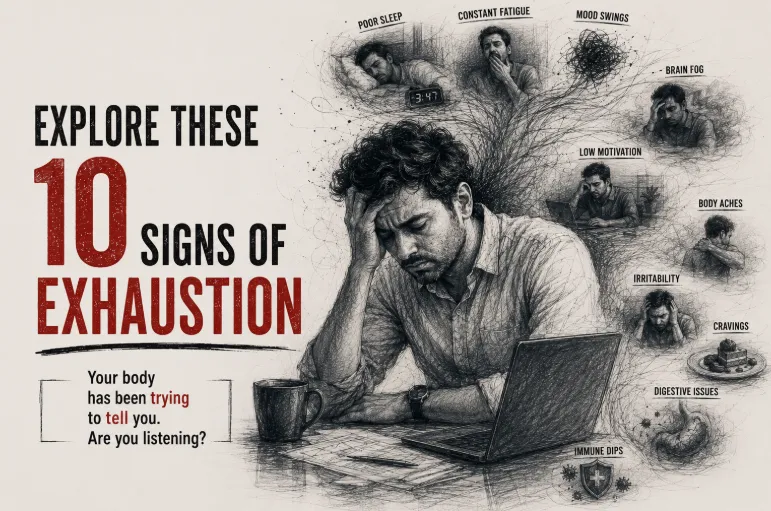
- Your Body Gives You Warning Signs: Feeling tired all the time, sleeping poorly, brain fog, frequent illness, body aches, digestive problems, headaches, irritability, low motivation, and constant cravings can all be signs that your body needs recovery.
- Everyday Habits Can Drain Your Energy: Long work hours, ongoing stress, vitamin deficiencies, busy routines, and even your environment can slowly wear you down, even if you’re getting enough sleep.
- Steps to Recover From Exhaustion: Getting your energy back means improving your sleep, eating well, managing stress, staying active, and checking for underlying health issues if your symptoms don’t improve.
Being busy doesn’t have to mean feeling exhausted. If you wake up tired every morning, depend on caffeine to stay productive, or feel like you’re running on empty no matter how much you sleep, don’t ignore it. Many people think this is just what adult life feels like. The reality is that constant exhaustion is often a sign that your body has been under stress for too long and isn’t getting the recovery it needs.
In this blog, you’ll learn what exhaustion really is, how it’s different from tiredness, fatigue, and burnout, the 10 signs your body may already be showing, the hidden causes behind long-term exhaustion, and practical, science-backed strategies to help you recover your energy and feel like yourself again.
What Are The Types Of Exhaustion?
Exhaustion is a state of physical, mental, and emotional depletion that develops when your body and mind have been under stress for too long without enough time to recover. It isn’t simply feeling sleepy after a busy day or needing an extra cup of coffee. Instead, it’s your body’s way of telling you that its physical and mental resources have been running low for weeks or even months.
Exhaustion doesn’t just affect one area of your health. It can show up in different ways:
- Physical exhaustion: Constant fatigue, muscle aches, low stamina, and feeling drained even after sleeping.
- Mental exhaustion: Brain fog, poor concentration, forgetfulness, slower thinking, and difficulty making decisions.
- Emotional exhaustion: Feeling overwhelmed, irritable, unmotivated, emotionally detached, or unable to cope with everyday challenges.
While these symptoms may appear separately at first, they often overlap as exhaustion progresses.
How Does Exhaustion Develop?
Exhaustion rarely happens overnight. It develops gradually as stress continues without enough recovery.
When you face a challenge, your body releases stress hormones like cortisol and adrenaline. These hormones temporarily increase your alertness and energy so you can respond to the situation effectively. Under normal circumstances, once the challenge is over, your nervous system returns to a relaxed state, your stress hormones decrease, and your body begins repairing itself.
This healthy cycle looks like:
Stress → Recovery → Better Performance
The problem begins when recovery never happens.
Long work hours, poor sleep, emotional stress, skipped meals, excessive caffeine, constant notifications, and a lack of downtime can keep your body in a prolonged state of “fight or flight.” Instead of switching back into its restorative “rest and digest” mode, your nervous system remains activated. Over time, this ongoing stress starts affecting nearly every system in your body, including your brain, immune system, digestive system, hormones, muscles, and metabolism.
People often use the terms tiredness, fatigue, exhaustion, and burnout interchangeably. While they may feel similar, they describe very different states of physical and mental health.
Exhaustion vs Tiredness vs Fatigue vs Burnout
Terms like tiredness, fatigue, exhaustion, and burnout are often used as if they mean the same thing, but they are indeed very different. Understanding the difference can help you recognise what your body is trying to tell you and what kind of recovery you actually need.
| Tiredness | Fatigue | Exhaustion | Burnout | |
| What it is | A normal response to physical or mental effort | Persistent lack of energy that doesn’t fully improve with rest | Physical, mental, and emotional depletion caused by prolonged stress and inadequate recovery | A work-related syndrome caused by chronic workplace stress that hasn’t been successfully managed |
| Common symptoms | Sleepiness, low energy | Ongoing tiredness, reduced stamina, poor concentration | Brain fog, irritability, muscle aches, low motivation, frequent illness, poor sleep | Emotional detachment from work, cynicism, reduced performance, exhaustion |
| How long it lasts | A few hours to a day | Several days or weeks | Weeks to months if the underlying cause isn’t addressed | Usually develops over months of chronic workplace stress |
| Recovery | Good sleep or a day of rest | Identifying and treating the underlying cause | Lifestyle changes, stress reduction, proper recovery, and addressing root causes | Recovery often requires changes to workload, work environment, boundaries, and stress management |
| Example | Feeling tired after a workout or a long day | Feeling drained for weeks after an illness | Waking up exhausted every day despite sleeping well and taking weekends off | Dreading work, feeling emotionally disconnected, and struggling to perform despite working long hours |
One of our clients, a 46-year-old business owner, believed he was simply “tired” because of his demanding schedule. Despite sleeping 7 to 8 hours every night, he woke up exhausted, struggled to focus, and relied on multiple cups of coffee just to get through the day.
A detailed root cause analysis revealed that his exhaustion wasn’t caused by work alone. Poor sleep quality, chronic stress, inconsistent meals, and vitamin deficiencies were all contributing to his low energy. By addressing these underlying issues instead of just masking the symptoms, he gradually regained his energy, improved his focus, and no longer felt drained every morning.
10 Signs Your Body Is Exhausted
Sign 1: You Feel Tired All the Time (Constant Fatigue)
Everyone feels tired after a long day. If you wake up exhausted despite getting enough sleep, struggle to make it through the afternoon without caffeine, find yourself losing focus during simple tasks, or get irritated over things that never used to bother you, it could be a sign of exhaustion rather than normal tiredness.
Here are four things that you might be doing:
- Waking up tired even after 7 to 9 hours of sleep
- Feeling drained from the moment the day begins
- Depending on coffee or energy drinks to stay productive
- Feeling like even simple tasks require too much effort
Persistent fatigue is one of the most common symptoms of chronic stress. Long-term activation of the body’s stress response can disrupt sleep quality, and energy production, leaving you feeling tired even after adequate rest.
One of our CEO clients was sleeping almost eight hours every night but still woke up exhausted. A root cause analysis done by us, revealed that poor recovery, chronic stress, and nutrient deficiencies (not a lack of sleep) were driving his low energy. Once these factors were addressed, his energy levels and focus improved significantly.
Sign 2: You Can’t Sleep Even When You’re Exhausted
One of the most frustrating signs of exhaustion is feeling incredibly tired during the day but lying awake at night. Your body is desperate for rest, yet your mind refuses to switch off.
Here are four things that you might be doing:
- Feeling sleepy all day but wide awake at bedtime
- Racing thoughts as soon as your head hits the pillow
- Waking up frequently during the night
- Feeling unrefreshed in the morning
Chronic stress keeps cortisol levels elevated and the nervous system in a state of hyperarousal, making it difficult to fall asleep or stay asleep. Research consistently shows a strong link between long-term stress and insomnia.
Sign 3: Your Brain Feels Foggy
Exhaustion affects your body, and it also affects the way your brain functions. Tasks that once felt simple suddenly require much more effort.
Here are four things that you might be doing:
- Forgetting names or appointments
- Reading the same paragraph multiple times
- Losing focus during conversations or meetings
- Making simple mistakes or poor decisions
Sign 4: You’re Getting Sick More Often
If you’re catching every cold that goes around the office or taking longer than usual to recover, your immune system may be under strain. Chronic stress suppresses immune function, making it harder for the body to fight infections and recover efficiently.
Here are three things that might be happening:
- Frequent colds or sore throats
- Minor illnesses lasting longer than usual
- Feeling “run down” most of the time
Sign 5: Small Things Make You Irritable
When you’re exhausted, your emotional resilience decreases. Situations you would normally brush off may suddenly feel overwhelming. Your brain’s ability to regulate emotions gets affected, making you more reactive and less able to manage everyday frustrations.
Here are four things that you might be doing:
- Snapping at family or colleagues
- Losing patience in traffic
- Feeling frustrated over small inconveniences
- Reacting more emotionally than usual
Sign 6: Your Body Feels Stiff, Tight or Sore
Even if you haven’t exercised, your body may constantly feel tense. Stress causes muscles to remain in a semi-contracted state for prolonged periods. Over time, this constant muscle tension can lead to pain, stiffness, and reduced mobility.
Here are four things that might be happening:
- Tight neck and shoulders
- Jaw clenching
- Persistent back pain
- Muscle soreness without an obvious reason
Sign 7: Your Digestion Has Changed
Your gut is highly sensitive to stress, which is why digestive problems are common when you’re exhausted.
Here are five things that you might be seeing:
- Frequent bloating
- Acidity or heartburn
- Constipation or diarrhoea
- IBS symptoms
- Appetite changes
Sign 8: You Get Frequent Headaches
Stress is one of the most common triggers for tension headaches and can also contribute to migraine attacks in susceptible individuals.
Here are three things that you might be seeing:
- Tight, band-like headaches
- Pain starting from the neck or shoulders
- Headaches that become worse during stressful periods
Sign 9: You Don’t Feel Excited About Anything Anymore
One of the less obvious signs of exhaustion is losing interest in things that once brought you joy.
Here are four things that you might be seeing:
- Lack of motivation
- Emotional numbness
- No excitement for hobbies or achievements
- Withdrawing from friends and family
Chronic stress and mental exhaustion can affect dopamine pathways involved in motivation and reward. Unlike depression, these feelings often improve as recovery and energy levels improve, although persistent symptoms should always be assessed by a healthcare professional.
Sign 10: You’re Craving Sugar, Junk Food or Caffeine
If your body is constantly searching for a quick energy boost, it may start craving foods that provide temporary relief.
Here are four things that you might be doing:
- Reaching for coffee multiple times a day
- Afternoon sugar cravings
- Late-night snacking
- Emotional eating after stressful days
Chronic stress and elevated cortisol levels can increase cravings for high-sugar, high-fat foods while also disrupting blood sugar regulation, creating a cycle of energy crashes and cravings.
Why Exhaustion Is So Common in India?
Exhaustion isn’t always caused by working too hard or sleeping too little. In India, several unique lifestyle, environmental, and nutritional factors can quietly drain your energy without you realising it. Even if you’re eating well and getting enough sleep, these hidden contributors may be preventing your body from fully recovering.
Vitamin Deficiencies
Not all exhaustion is caused by stress or lack of sleep. In India, deficiencies in vitamin D, vitamin B12, and iron are surprisingly common and can cause symptoms that closely resemble burnout.
Despite abundant sunshine, vitamin D deficiency remains widespread due to modern lifestyles. Spending most of the day indoors, working in offices with limited sunlight, regular sunscreen use, air pollution, and darker skin pigmentation can all reduce the body’s ability to produce vitamin D.
Similarly, vitamin B12 deficiency is more common among people following vegetarian diets, while iron deficiency is particularly prevalent among women due to menstruation and pregnancy.
These deficiencies can contribute to:
- Persistent fatigue
- Brain fog and poor concentration
- Muscle weakness and body aches
- Shortness of breath during simple activities
- Low mood and reduced productivity
Research published in the Indian Journal of Endocrinology and Metabolism, along with data from the Indian Council of Medical Research (ICMR) and Indian nutrition studies, shows that deficiencies of vitamin D, vitamin B12, and iron are widespread in India and are important, yet often overlooked, contributors to persistent exhaustion. If you continue to feel exhausted despite adequate rest, it’s worth discussing these deficiencies with a healthcare professional.
The 45.7-Hour Work Week
For many professionals and business owners, work doesn’t end when they leave the office. Meetings extend beyond business hours, and weekends become another opportunity to “catch up.”
Modern work also comes with additional energy drains:
- Long daily commutes
- Hours of continuous screen exposure
- Work calls after office hours
- Little time for exercise, meals, or proper recovery
Heat, Humidity and Urban Commutes
Living in Indian cities places an additional burden on the body that many people overlook.
Daily exposure to:
- High temperatures
- Humidity
- Traffic congestion
- Air pollution
- Long commutes
can leave you feeling physically and mentally drained before your workday has even begun.
Climate-health research shows that prolonged heat exposure increases dehydration, places additional stress on the cardiovascular system, reduces physical performance, and contributes to fatigue. Combined with long hours in traffic and poor air quality, these environmental stressors can significantly increase feelings of exhaustion, particularly during the summer months.
How to Recover from Exhaustion
Recovery isn’t about taking one weekend off or sleeping in on Sunday. If your body has been under stress for weeks or months, then it needs consistent recovery. The goal isn’t simply to feel better for a day. The goal is to restore your body’s ability to recover, and maintain healthy energy levels over time.
At WAYDA, one of the most common patterns we see is people trying to “push through” exhaustion. They often rely on more coffee, work longer hours, or exercise harder, believing they’ll eventually feel better. In reality, lasting recovery usually begins by improving the foundations of health rather than adding more to an already exhausted body.
Prioritize High-Quality Sleep
Sleep is one of the most powerful recovery tools your body has. During sleep, your body repairs tissues, regulates hormones, strengthens your immune system, and processes memories. If your sleep quality is poor, your body has fewer opportunities to recover from the demands of the day.
To support better sleep:
- Go to bed and wake up at the same time every day.
- Get 10–20 minutes of morning sunlight soon after waking.
- Avoid screens for at least an hour before bed.
- Keep your bedroom cool, dark, and quiet.
- Limit caffeine later in the day.
In our experience, many people focus on sleeping longer when what they actually need is better-quality sleep. Even small improvements in sleep habits can make a noticeable difference in energy levels.
Eat to Restore Your Energy
Recovery depends on giving your body the nutrients it needs to repair and function properly. Skipping meals, eating highly processed foods, or relying on caffeine throughout the day can make exhaustion worse.
Aim to include:
- Protein with every meal.
- Fibre-rich fruits, vegetables, legumes, and whole grains.
- Healthy fats such as nuts, seeds, olive oil, and oily fish.
- Plenty of water throughout the day.
It’s also worth considering whether nutrient deficiencies may be contributing to your symptoms. Low levels of vitamin D, vitamin B12, iron, and magnesium have all been associated with fatigue and reduced physical or mental performance. A healthcare professional can help determine whether testing is appropriate before starting supplements.
During our health assessments at WAYDA, we frequently find that people who believe they are simply “burnt out” also have lifestyle habits or nutritional gaps that are limiting their recovery.
Move Without Overtraining
Exercise supports recovery, but only when it’s balanced with adequate rest.
If you’re already exhausted, intense daily workouts may leave you feeling worse rather than better. Instead, focus on movement that helps your body recover.
Consider:
- Daily walks
- Strength training two or three times per week
- Mobility and stretching exercises
- Recovery days between demanding workouts
According to the American College of Sports Medicine, regular physical activity supports overall health, but adequate recovery is equally important for preventing excessive fatigue and maintaining long-term performance.
Reduce Chronic Stress Instead of Just Managing It
Stress is part of everyday life, but living in a constant state of stress keeps your nervous system from fully recovering.
Research suggests that practices such as mindfulness, breathing exercises, and relaxation techniques can help lower stress and improve overall well-being.
Helpful habits include:
- Breathwork
- Meditation
- Journaling
- Setting healthier work boundaries
- Delegating responsibilities where possible
One pattern we regularly observe is that people wait until they feel overwhelmed before taking a break. Building small recovery habits into your daily routine is often far more effective than trying to recover after months of continuous stress.
Schedule Recovery Like You Schedule Meetings
Many professionals carefully plan every meeting, deadline, and business commitment, yet leave recovery to chance.
Treat recovery as part of your schedule by making time for:
- Short breaks during the workday
- Screen-free periods
- Regular digital detoxes
- Weekends with genuine downtime
- Holidays where you can disconnect from work
Recovery isn’t time away from productivity, it helps make consistent productivity possible.
Get Blood Tests If Symptoms Persist
Not every case of exhaustion is caused by lifestyle alone. If you’ve made healthy changes but continue to feel exhausted, it’s important to rule out underlying medical conditions.
Your healthcare professional may recommend investigations such as:
- Complete Blood Count (CBC)
- Ferritin
- Vitamin D
- Vitamin B12
- Thyroid profile
- HbA1c, when appropriate
These tests can help identify potential causes such as anaemia, thyroid disorders, nutrient deficiencies, or blood sugar abnormalities. They should always be interpreted by a qualified healthcare professional, who can recommend the most appropriate treatment based on your individual health history and symptoms.
Conclusion
While an extra cup of coffee or a weekend off may help for a short time, real recovery comes from understanding what’s causing your exhaustion in the first place. Small, consistent changes to your sleep, nutrition, stress levels, and daily routine can help your body recover, restore your energy.
At WAYDA, Kapiil Guptta and the team work with business owners and professionals to identify the root causes of persistent exhaustion through personalised coaching and advanced health assessments. Rather than focusing on quick fixes, they help you build sustainable habits that improve your energy and support long-term health. If you’re ready to stop feeling exhausted and start feeling like yourself again, WAYDA can help you take the first step.
Frequently Asked Questions
What are signs of exhaustion?
Exhaustion goes beyond typical tiredness. Key signs include persistent fatigue that doesn’t improve with rest, brain fog, and increased irritability. You may also experience muscle weakness, frequent headaches, and a loss of motivation for routine tasks.
How to stop fatigue fast?
Get an instant energy jolt by drinking a large glass of ice-cold water, splashing freezing water on your face to stimulate circulation, or stepping outside for a brisk 5-minute walk. If you need a quick pick-me-up, try a breathing reset: inhale deeply for 4 seconds, and exhale slowly for 8 seconds.
How long can exhaustion last?
Even a week of feeling more tired than usual is not uncommon. Yet most people can tell when their fatigue feels like something more serious. If that’s the case, or your fatigue gets worse or lasts longer than a week or two, it’s time to see your doctor.
How to boost energy levels?
Boost your energy by prioritizing 7-8 hours of quality sleep, eating slow-release complex carbs (oats, brown rice) with lean protein, and staying hydrated. Get regular cardiovascular exercise, manage chronic stress through deep breathing or yoga, and cut out energy-zapping habits like smoking.
What vitamin deficiency causes fatigue?
Low levels of vitamin B12, iron, or vitamin D can lead to fatigue and weakness. These deficiencies reduce oxygen circulation in the body, causing persistent tiredness. Fix it: Eat more iron-rich foods like spinach, lean meats, and fortified cereals. If fatigue persists, consider a comprehensive medical evaluation.
👉 Read More: How to Reduce Stress Naturally and Live a Healthier Life
Follow Kapiil Gupta on Instagram for practical health tips, executive wellness strategies, and evidence-based guidance to improve your energy, leadership, and business performance.
👉 Instagram: https://instagram.com/kapiilguptta

Leave a Reply