

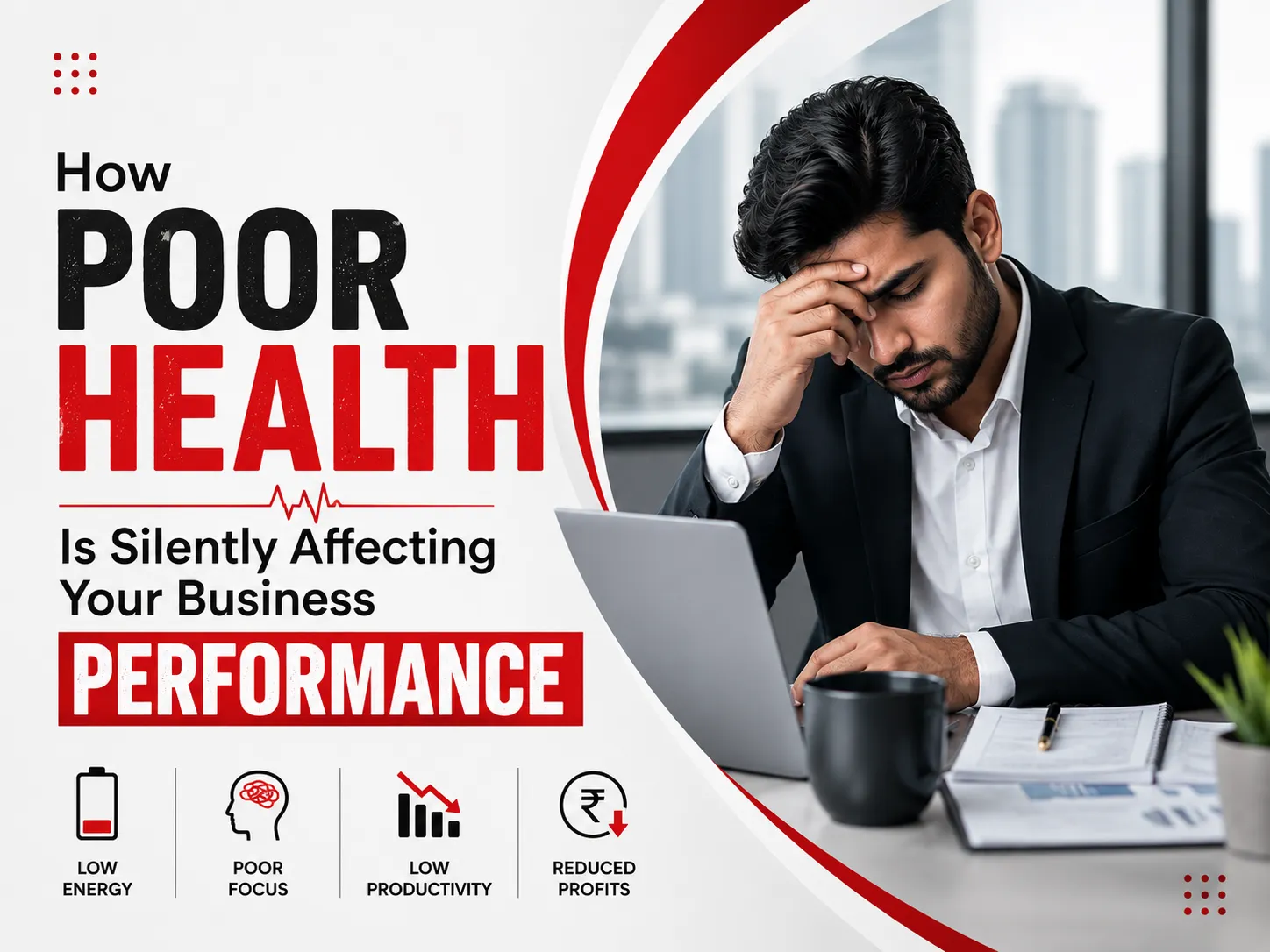

How Poor Health Is Silently Affecting Your Business Performance
- The Performance Link: Health is a core driver of business results because the quality of strategic decisions and operational execution depends entirely on the physical and mental well-being of the people leading and running the organization.
- Silent Operational Drags: Poor health manifests as hidden performance barriers such as delayed projects and inconsistent decision-making that drain productivity far more insidiously than obvious absenteeism.
- Operational Warning Signals: Business performance stalls are often early indicators of workforce strain, visible through patterns like diminishing output, manager burnout, and high turnover that signal a deeper need for a health audit.
- Sustainable Growth Strategy: Treating health as a strategic business metric allows leaders to proactively address root performance issues, fostering a culture where individual well-being and organizational success advance together.
When business performance starts to decline, most leaders assume the problem lies within the business itself. Growth slows, decisions become harder to make, teams struggle to maintain momentum, and productivity begins to dip. The natural response is to review business strategies, improve operations, or adapt to changing market conditions. What often goes unnoticed is that the underlying issue may not be the business at all. It could be the health of the people driving it. Poor physical and mental health not only affects individuals, but it also influences leadership, employee performance, and ultimately, business results. In this blog, you’ll discover the relationship between health and business performance, learn how poor health affects organizations, identify the warning signs that are easy to miss, and explore practical ways to reduce its impact.
What Is the Relationship Between Health and Business Performance?
At first glance, health and business performance may seem like two separate subjects. One is often viewed as a personal responsibility, while the other is measured through revenue, productivity, profitability, and business growth. In reality, they’re closely connected because every business outcome depends on the people making decisions and executing them.
A leader’s physical and mental health can influence the quality of strategic decisions, the speed of problem-solving, and the ability to lead teams effectively. Similarly, employee health affects focus, engagement, attendance, and overall productivity. When health begins to decline, businesses don’t just experience individual setbacks they often see slower execution, reduced efficiency, and higher operational costs.
Research consistently reinforces this connection. According to Deloitte India, poor mental health costs Indian organizations an estimated ₹1.1 lakh crore every year, with losses extending far beyond absenteeism. A significant share of this cost comes from presenteeism, where employees are present at work but unable to perform at their full potential.
For many organizations, these costs don’t appear as a single line item on a financial statement. Instead, they surface through missed deadlines, inconsistent decision-making, rising employee turnover, and declining business performance. Recognizing health as a business driver rather than an employee benefit helps leaders address these issues before they become long-term barriers to growth.
Expert Insight: Businesses often invest heavily in improving systems, technology, or processes when performance drops. Those investments are valuable, but they rarely deliver their full potential if the people responsible for driving the business are operating below their best because of poor health.
How Poor Health Is Silently Affecting Your Business Performance
Poor health doesn’t affect business performance in just one way. It influences both the people leading the business and the people responsible for running it every day.
Factors Affecting You as a Leader
Your health has a direct influence on the way you lead your business. Even small declines in physical or mental well-being can affect your ability to:
- Make timely business decisions.
- Stay focused during high-pressure situations.
- Think strategically instead of reacting to problems.
- Lead teams with consistency.
- Adapt quickly when market conditions change.
For founder-led businesses and India’s 63+ million MSMEs, these effects are often amplified because the business depends heavily on the owner’s involvement.
Factors Affecting Your Business
The impact extends across the entire organization and often appears in places leaders don’t immediately connect to health.
- Lower employee productivity due to presenteeism.
- Increased absenteeism and sick leave.
- Delayed project delivery.
- Higher employee turnover.
- Rising healthcare and operational costs.
- Reduced customer satisfaction caused by inconsistent execution.
Presenteeism contributes a significantly larger financial burden than absenteeism, making it one of the biggest hidden productivity challenges for businesses.
Expert Insight: When businesses experience slowing performance, the first instinct is usually to improve processes or introduce new tools. Before making those investments, it’s worth asking a simpler question: Are the people driving the business able to perform at their full potential?
How to Identify the Warning Signs in Your Business?
Poor health rarely affects business performance all at once. Instead, it leaves behind warning signs that, when recognized early, can help prevent larger operational and financial challenges.
Common Warning Signs
- Declining productivity: If employees are putting in the same amount of time but accomplishing less, the issue may not always be related to workload or inefficient processes. Reduced physical and mental well-being can affect concentration, energy levels, and the ability to consistently perform at a high level.
- Slower decision-making: Every business relies on timely decisions. When leaders or managers begin delaying approvals, second-guessing routine decisions, or struggling to prioritize, it may indicate that mental fatigue is affecting cognitive performance.
- Increasing absenteeism and presenteeism: While frequent sick leave is easy to notice, presenteeism is often the bigger concern. Employees may be physically present but unable to contribute at their usual capacity, leading to lower productivity that often goes unnoticed. Research shows that presenteeism costs Indian businesses significantly more than absenteeism.
- Higher employee turnover: Employees who experience prolonged stress or burnout are more likely to disengage and eventually leave. Beyond recruitment costs, frequent turnover disrupts teamwork, reduces institutional knowledge, and affects business continuity.
- More operational bottlenecks: Projects begin taking longer, collaboration becomes less effective, and managers spend more time solving day-to-day issues instead of focusing on growth. While these problems may appear operational, they can also signal declining workforce well-being.
Conduct a Business Health Audit
Recognizing these warning signs is only the first step. A business health audit helps determine whether these issues are isolated or part of a broader pattern affecting performance.
- Review productivity trends: Compare current output with previous months to identify whether performance has steadily declined.
- Track workforce stability: Monitor absenteeism, turnover, and employee engagement together rather than as separate metrics.
- Evaluate leadership capacity: Assess whether managers are spending most of their time resolving routine issues instead of focusing on strategic priorities.
- Measure the impact of wellness initiatives: Review whether existing health programs have improved engagement, retention, or productivity.
- Look beyond financial metrics: If growth, customer satisfaction, or project delivery are declining without a clear external cause, it may be time to evaluate whether workforce health is contributing to the problem.
A business health audit isn’t about diagnosing medical conditions. It’s about identifying patterns that may be limiting your organization’s ability to perform consistently and sustainably.
How to Reduce the Impact of Poor Health on Business Performance
As a business owner, investing in health is about protecting your business. Here are three ways to reduce the impact of poor health on business performance:
Invest in Leadership Health
Business performance often reflects the quality of leadership. Supporting leaders in maintaining their physical and mental well-being helps them make better decisions, respond effectively to challenges, and create a healthier work environment for their teams.
Some practical steps include:
- Encourage sustainable work habits: Long working hours don’t always translate into better outcomes. Creating realistic schedules helps leaders maintain focus and avoid burnout.
- Prioritize preventive healthcare: Regular health check-ups, stress management, and early intervention can prevent minor health concerns from becoming larger business risks.
- Lead by example: Employees are more likely to adopt healthy work habits when leadership demonstrates the same commitment instead of promoting an “always-on” culture.
Build a Healthier Workplace
Creating a healthy workplace goes beyond offering occasional wellness initiatives. It requires policies and practices that support employees every day.
Focus on areas such as:
- Promoting work-life balance: Flexible work arrangements, reasonable workloads, and adequate time off help employees recover and perform consistently.
- Supporting mental well-being: Encourage open conversations, provide access to professional support where possible, and reduce the stigma around seeking help.
- Improving the work environment: Comfortable workspaces, ergonomic setups, and opportunities for movement during the day contribute to better physical health and sustained productivity.
Measure Health as a Business KPI
What gets measured gets managed. Alongside financial and operational metrics, businesses should regularly track indicators that reflect workforce well-being.
Monitor metrics such as:
- Employee absenteeism and presenteeism: Understanding both provides a clearer picture of productivity challenges.
- Employee engagement and retention: Rising disengagement or turnover can signal deeper health and workplace culture issues.
- Productivity trends: Compare output over time to identify whether improvements in employee well-being are translating into better business performance.
According to the 2025 CII–MediBuddy Corporate Wellness Index, every ₹1 invested in employee health can generate ₹3–₹4 in savings, alongside measurable improvements in productivity and retention. Viewing health as a strategic investment rather than an employee benefit helps businesses achieve stronger long-term outcomes.
Businesses that consistently invest in the health of their leaders and employees are often better equipped to adapt, innovate, and sustain growth. More importantly, they create workplaces where people and performance improve together.
Conclusion
Poor health doesn’t just affect individuals; it influences the decisions you make, the way your team performs, and the direction your business takes. Recognizing this connection early allows you to address the root cause, strengthen performance, and build a business that is better prepared for long-term success.
If you’re ready to understand how your health or your team’s well-being could be impacting business performance, book a consultation with Kapiil Guptta. Together, you can identify hidden performance barriers and develop practical strategies that support healthier leadership, stronger teams, and sustainable business growth.
Frequently Asked Questions
1. How might poor health affect a business?
Poor health can influence business performance in several ways, including slower decision-making, reduced productivity, higher absenteeism, increased employee turnover, and rising operational costs. While these issues may appear unrelated at first, they often stem from declining physical or mental well-being among leaders and employees.
2. How does health affect business performance?
Business performance depends on the people driving it. When leaders and employees are physically and mentally healthy, they are better equipped to make decisions, solve problems, collaborate effectively, and maintain consistent productivity. Over time, this contributes to stronger business outcomes and sustainable growth.
3. How does poor health affect productivity?
Poor health can reduce concentration, energy levels, and cognitive performance, making it harder for employees to work efficiently. It also contributes to presenteeism, where employees are at work but unable to perform at their full capacity, resulting in lower overall productivity.
4. Can investing in employee health improve business performance?
Yes. Investing in employee health can lead to improved engagement, reduced absenteeism, higher productivity, and better retention. Research also suggests that organizations with effective workplace health initiatives often experience measurable returns through lower healthcare costs and improved business performance.
5. How can business owners identify whether health is affecting their business?
Business owners should monitor indicators such as declining productivity, rising absenteeism, higher employee turnover, slower decision-making, and reduced employee engagement. Reviewing these trends together can help identify whether health-related factors are influencing overall business performance.
Busy entrepreneurs often struggle with unhealthy eating patterns. Learn whether intermittent fasting is the right strategy for improving energy, focus, and long-term health.
👉 Read More: The Truth About Intermittent Fasting for Indians
Follow Kapiil Gupta on Instagram for practical health tips, executive wellness strategies, and evidence-based guidance to improve your energy, leadership, and business performance.
👉 Instagram: https://instagram.com/kapiilguptta