

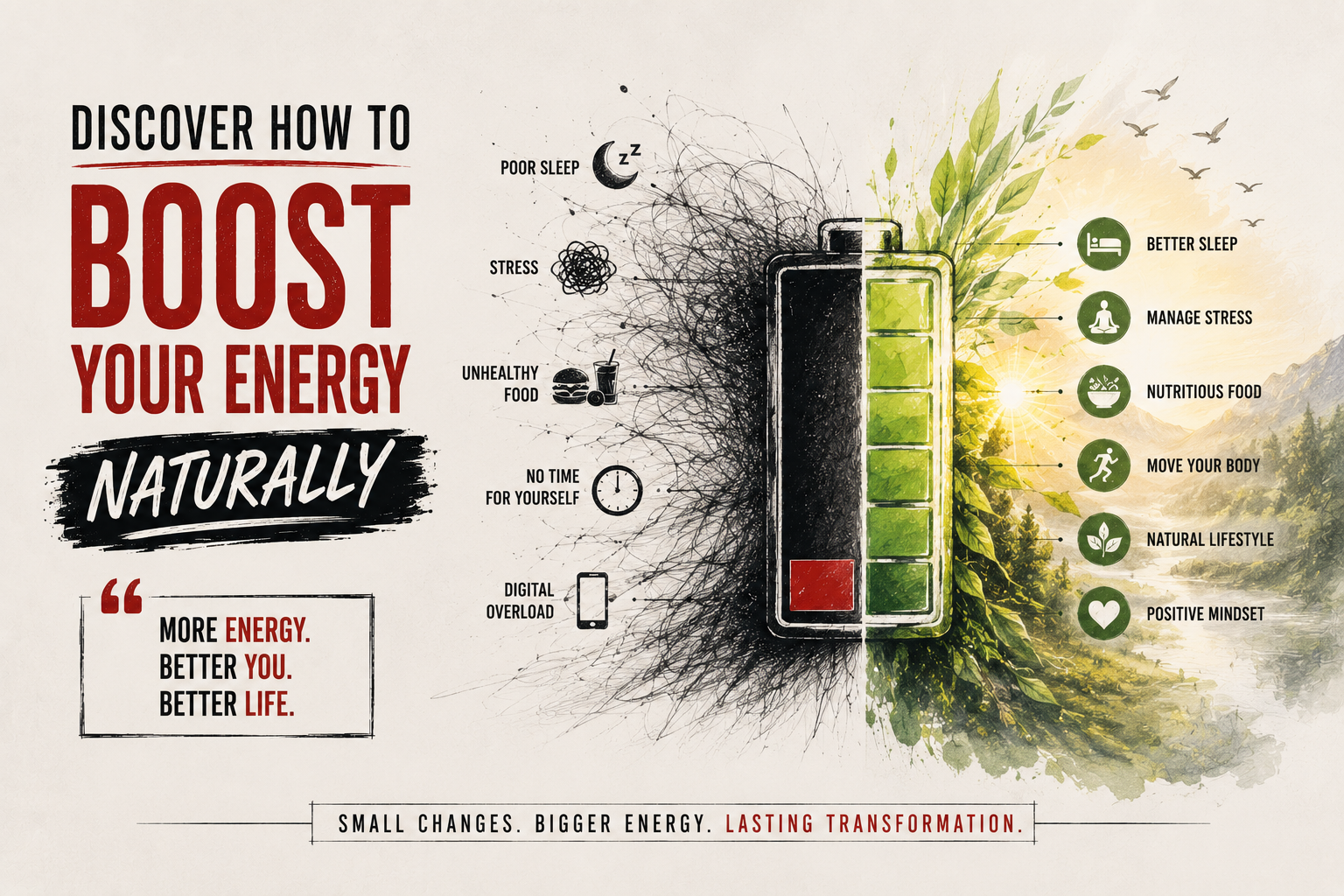

How to Boost Your Energy Naturally
- Energy Starts Inside: Lasting energy is produced by your body’s cells, not by caffeine or sugar. Healthy sleep, nutrition, movement, gut health, and stress regulation all work together to keep your energy systems functioning efficiently.
- Fatigue Has Multiple Causes: Persistent tiredness is rarely caused by one factor alone. Poor sleep, chronic stress, nutrient gaps, prolonged sitting, mental overload, environmental factors, and underlying health conditions can all contribute to low energy.
- Daily Habits Shape Energy Levels: Consistent habits such as eating balanced meals, maintaining a regular sleep schedule, staying active, supporting gut health, and using evidence-backed practices help improve energy naturally over time.
- Remove What Drains You: Building energy isn’t only about adding healthy habits. Identifying and replacing physical, mental, emotional, and lifestyle energy vampires often creates the biggest improvements in focus, recovery, and overall wellbeing.
Fatigue has quietly become one of the most common health concerns in India. More people are waking up feeling exhausted, relying on multiple cups of tea or coffee to get through the day, and still struggling with brain fog and afternoon energy crashes. In many cases, persistent fatigue is your body’s way of signalling that something needs attention, whether it’s poor sleep, chronic stress, nutritional gaps, an inactive lifestyle, or an underlying health condition.
In this blog, we’ll explore why so many Indians are running low on energy, what science tells us about how the body actually produces energy, and the everyday factors that can either support or drain it. You’ll learn evidence-based ways to improve your energy naturally, from better nutrition and sleep to movement, stress management, and identifying the hidden “energy vampires” that may be holding you back.
What Are The Common Causes Of Low Energy?
Your body is designed to produce energy continuously, but when it doesn’t get the right nutrition, quality sleep, regular movement, or enough time to recover from stress, fatigue becomes inevitable. Understanding these root causes is the first step toward restoring your energy naturally.
Low energy affects more than physical performance. It can reduce productivity, impair concentration, lower motivation, and make healthy habits such as exercise, and quality sleep harder to maintain. Here are the causes of low energy:
- Poor Sleep
Sleep is when the body repairs tissues, balances hormones, and restores the brain. Yet many Indians get less than the recommended seven to nine hours of sleep because of long workdays, late-night screen use, or irregular schedules. Even adequate sleep may not feel refreshing if its quality is poor.
In the 2024 Supradyn Fatigue Survey, which found that 82% of urban Indians woke up feeling tired, while 85% of adults aged 25 to 35 experienced morning fatigue. More than 8 in 10 respondents also reported energy crashes during the day. Although the survey was commissioned by a multivitamin brand and focused on urban working adults, it highlights how widespread fatigue has become.
- Chronic Stress
Constant work pressure, financial responsibilities, long commutes, and digital connectivity keep the body’s stress response activated for longer than intended. Over time, this affects sleep, recovery, and energy production.
Common signs include:
- Brain fog
- Difficulty concentrating
- Irritability
- Feeling overwhelmed
- Constant tiredness despite resting
- Sedentary Lifestyle
Spending long hours sitting at a desk or in traffic reduces circulation, weakens fitness, and lowers the body’s ability to produce energy efficiently. Even short periods of movement throughout the day can improve energy levels.
- Poor Nutrition
The body needs nutrients to produce energy. Diets high in processed foods and low in protein, iron, vitamin B12, vitamin D, magnesium, and folate may contribute to fatigue.
While the Supradyn survey measured perceived nutrient gaps rather than actual deficiencies, research from ICMR shows that deficiencies in iron and vitamin D remain common in India.
- Mental Overload
Emails, meetings, notifications, and constant multitasking place continuous demands on the brain. This mental workload can leave you feeling exhausted even without much physical activity.
- Medical Conditions
Persistent fatigue can sometimes be a sign of an underlying health condition rather than lifestyle alone. Conditions such as iron-deficiency anemia, thyroid disorders, diabetes, vitamin B12 or vitamin D deficiency, depression, anxiety, and obstructive sleep apnea can all contribute to ongoing tiredness.
If your fatigue persists despite healthy lifestyle changes, or is accompanied by symptoms such as unexplained weight loss, breathlessness, or persistent fever, consult a healthcare professional for evaluation.
Understanding why you feel tired is only one part of the solution. The next step is supporting the systems that produce energy every day. While there is no single food, supplement, or routine that can eliminate fatigue overnight, small, sustainable lifestyle changes can significantly improve energy levels over time.
The goal is not to chase temporary boosts from caffeine or sugar. Instead, it is to build habits that help your body produce energy more efficiently and recover better each day.
What’s Secretly Draining Your Energy?
Improving your energy isn’t always about adding more healthy habits. Sometimes, the biggest improvement comes from identifying and removing the things that quietly drain your physical and mental energy every day.
What Are Energy Vampires?
Energy vampires are habits, environments, relationships, or thought patterns that quietly drain your physical and mental energy over time. Unlike obvious causes of fatigue such as illness or sleep deprivation, these hidden energy drains often become part of your daily routine, making them difficult to recognize.
They may not leave you feeling exhausted overnight, but their effects gradually add up. Constant stress, poor sleep, excessive screen time, unhealthy eating, negative relationships, and endless multitasking can all reduce your ability to focus, recover, and perform at your best.
Identifying these energy vampires is just as important as adopting healthy habits. Sometimes, the fastest way to boost your energy isn’t by adding something new—it’s by removing what has been silently draining it all along.
The Four Types of Energy Vampires
Physical Energy Vampires
These are habits that place unnecessary stress on your body and reduce its ability to recover.
Here are six physical energy vampire:
- Poor sleep
- Skipping meals
- Excess sugar and processed foods
- Dehydration
- Physical inactivity
- Chronic pain or untreated health issues
Mental Energy Vampires
Your brain uses a significant amount of your daily energy. Constant mental stimulation without breaks can quickly lead to cognitive fatigue.
Five common mental energy vampires include:
- Multitasking
- Constant notifications
- Decision fatigue
- Information overload
- Overthinking
Emotional Energy Vampires
Relationships and emotions can either restore your energy or quietly drain it.
Here are five emotional energy vampire:
- Unresolved conflict
- Negative relationships
- People-pleasing
- Constant worrying
- Lack of boundaries
Lifestyle Energy Vampires
Some habits slowly reduce your energy simply because they make healthy choices more difficult.
Five lifestyle energy vampire:
- Late-night screen use
- Irregular sleep schedules
- Long periods of sitting
- Poor daily planning
- Working without breaks
Find Your Biggest Energy Drains
Before trying to build new habits, take a closer look at your current routine. Ask yourself:
- What leaves me feeling drained every day?
- When does my energy usually drop?
- Which habits help me feel better, and which make me feel worse?
- What is one habit I could remove this week?
Keeping a simple energy journal for a few days can help you identify patterns that are easy to miss.
Building energy is not only about what you add to your routine. It is also about identifying what quietly takes your energy away. By reducing these hidden drains first, the healthy habits you build become easier to maintain and far more effective in the long run.
- How to Build Energy Through Better Nutrition?
The food you eat determines more than just how full you feel. It provides the nutrients your cells need to produce ATP, regulate blood sugar, maintain muscle function, and support brain health. Eating balanced meals at regular intervals helps prevent sudden spikes and crashes in energy, while nutrient-rich foods provide the vitamins and minerals needed for healthy metabolism.
Choose Foods That Release Energy Slowly
Meals that combine complex carbohydrates, protein, healthy fats, and fibre provide a more consistent source of energy than refined carbohydrates or sugary snacks.
Ten excellent Indian foods for sustained energy include:
- Dal and legumes
- Paneer and curd
- Eggs
- Millets such as ragi, jowar, and bajra
- Oats
- Brown rice
- Sprouts
- Seasonal fruits
- Nuts and seeds
- Green leafy vegetables
Including protein in every meal also helps improve satiety and slows the absorption of carbohydrates, reducing sudden energy crashes.
Avoid Foods That Can Leave You Feeling Tired
Some foods provide a quick burst of energy but are often followed by a noticeable slump. Highly refined carbohydrates and foods high in added sugar can cause rapid increases in blood sugar, followed by a sharp drop as insulin removes glucose from the bloodstream.
Limiting these five foods may help maintain steadier energy levels:
- Sugary beverages
- Packaged sweets and desserts
- Refined bakery products
- Deep-fried snacks
- Ultra-processed convenience foods
These foods can still be enjoyed occasionally, but they should not form the foundation of your daily diet.
Avoid Late Dinners Matter
Many people focus on what they eat but overlook when they eat. Eating large meals late at night can interfere with digestion and sleep quality, making it harder to wake up feeling refreshed.
As the body prepares for sleep, digestion naturally slows. A heavy dinner close to bedtime can increase the likelihood of acid reflux, disturbed sleep, and poorer overnight recovery.
Here are three things changes that can improve energy:
- Finish dinner at least two to three hours before bedtime.
- Keep evening meals lighter than lunch.
- Avoid heavy, greasy, or high-sugar meals late at night.
Include Fermented Foods In Your Diet
Traditional Indian diets have long included fermented foods that support digestive health. Modern research suggests these foods may benefit the gut microbiome, which plays an important role in nutrient absorption and overall wellbeing.
5 Indian fermented food that helps in overall wellbeing:
- Curd
- Idli
- Dosa made from naturally fermented batter
- Kanji
- Homemade fermented vegetables
While fermented foods are not a cure for fatigue, they can be part of a balanced diet that supports gut health and efficient energy metabolism.
2. Which Ayurvedic Herbs Help Boost Energy?
Ayurveda has used herbs to support vitality and resilience for centuries. In recent years, several of these herbs to better understand their potential effects on fatigue, and overall wellbeing.
Although some herbs show promising results, they should complement healthy lifestyle habits rather than replace them. The quality of herbal products also varies, making it important to choose reputable brands and consult a healthcare professional if you have existing medical conditions or take prescription medications.
Ashwagandha
Ashwagandha is one of the most extensively researched Ayurvedic herbs. It is classified as an adaptogen, meaning it may help the body respond more effectively to physical and psychological stress.
Clinical studies suggest it may reduce perceived stress, improve sleep quality, support physical performance, and help reduce fatigue in some individuals. Most research has used standardized extracts of 300–600 mg per day, though the appropriate dose varies depending on the product and individual needs.
Shatavari
Shatavari has traditionally been used to support women’s health and general vitality. While human research remains more limited than for Ashwagandha, preliminary studies suggest it may support hormonal balance and overall wellbeing.
More high-quality research is still needed before firm conclusions can be made regarding its effects on fatigue.
Tulsi
Tulsi, also known as Holy Basil, has been studied for its potential antioxidant and stress-reducing properties. Early research suggests it may help improve resilience to everyday stress and support overall health. Tulsi is commonly consumed as an herbal tea and is generally well tolerated when consumed in moderate amounts.
Giloy
Giloy has traditionally been used in Ayurveda to support immune health. Some laboratory and preliminary clinical studies suggest it may have anti-inflammatory and immune-supportive properties.
However, evidence regarding its ability to improve energy or reduce fatigue remains limited. There have also been reports of liver injury associated with excessive or inappropriate use of Giloy supplements, making responsible use especially important.
Before using Ayurvedic herbs:
- Speak with your healthcare provider if you are pregnant or breastfeeding.
- Consult your doctor if you have thyroid disease, autoimmune disorders, liver disease, or diabetes.
- Purchase products that have undergone quality testing.
- Follow the recommended dosage rather than assuming higher amounts are more effective.
3. How to Improve Your Sleep Quality
The number of hours you sleep is important, but so is the quality and consistency of that sleep. A regular sleep schedule supports your body’s internal clock, making it easier to fall asleep, wake up refreshed, and maintain stable energy throughout the day.
Prioritize a Consistent Sleep Schedule
One of the most effective ways to improve sleep quality is to go to bed and wake up at roughly the same time every day, including weekends.
This consistency helps regulate your circadian rhythm, allowing hormones involved in sleep, alertness, and recovery to function more effectively.
Aim to:
- Sleep for seven to nine hours each night.
- Maintain a regular bedtime and wake-up time.
- Get natural sunlight within the first hour after waking.
Avoid Heavy Late-Night Meals
Eating a heavy meal close to bedtime can slow digestion and make it harder to get restful sleep. If you need to eat later in the evening, choose a lighter meal and leave some time between dinner and going to bed.
Follow these four steps for better sleep:
- Finish dinner 2–3 hours before bedtime whenever possible.
- Keep evening meals lighter than lunch.
- Avoid greasy, spicy, or high-sugar foods late at night.
- Don’t lie down immediately after eating.
Reduce Blue Light Before Bed
Phones, tablets, laptops, and televisions emit blue light that can suppress melatonin, the hormone that helps regulate your sleep-wake cycle. Reducing screen exposure before bed can make it easier to fall asleep and improve sleep quality.
Four ways to reduce blue light exposure:
- Limit screen time during the hour before bed.
- Use night mode or blue-light filters on your devices.
- Replace scrolling with relaxing activities like reading, gentle stretching, or quiet conversation.
- Keep bright lights dim in the evening to help your body prepare for sleep.
Build An Evening Routine
A predictable evening routine prepares both the body and mind for sleep.
Simple habits may include:
- Dimming lights after dinner
- Limiting caffeine late in the day
- Practising gentle breathing exercises
- Reading a book
- Keeping your bedroom cool, quiet, and dark
Small routines performed consistently often have a greater impact than occasional dramatic changes.
4. What Movement Helps to Boost Energy?
Many people avoid exercise because they already feel tired. Ironically, regular movement is one of the most effective ways to improve energy levels.
Physical activity strengthens the heart, improves circulation, enhances mitochondrial function, and supports better sleep. Over time, these changes help your body produce and use energy more efficiently.
Walk for 10 Minutes After Lunch
A short walk after lunch is one of the simplest habits you can build.
Walking for about 10 minutes after eating may:
- Improve blood sugar regulation
- Support digestion
- Reduce afternoon sluggishness
- Improve concentration for the rest of the workday
The goal is not speed but consistency.
Practice Yoga
Yoga combines movement, breathing, flexibility, and relaxation, making it particularly useful for people whose fatigue is linked to stress or prolonged sitting.
Some yoga postures that may help reduce fatigue include:
- Tadasana (Mountain Pose)
- Bhujangasana (Cobra Pose)
- Setu Bandhasana (Bridge Pose)
- Balasana (Child’s Pose)
- Viparita Karani (Legs-Up-the-Wall Pose)
Regular practice may improve flexibility, posture, circulation, and overall wellbeing.
Practice Pranayama
Breathing exercises can influence the nervous system within minutes. Slow, controlled breathing helps reduce stress while improving oxygen exchange and promoting relaxation.
Common practices include:
- Anulom Vilom for balance and relaxation
- Bhramari for calming the mind
- Bhastrika for increasing alertness in healthy individuals
People with uncontrolled high blood pressure, heart disease, or respiratory conditions should learn these techniques under the guidance of a qualified instructor.
Understanding the Roots of Lasting Energy
Many people think energy comes from coffee or sugar. In reality, the energy you feel is produced inside your body every second. Every heartbeat, thought, and movement depends on your cells converting nutrients from food into usable energy.
When this process is affected by poor sleep, chronic stress, nutrient deficiencies, illness, or inactivity, your body becomes less efficient at producing energy. Understanding how it works can help you identify why you feel tired and what you can do about it.
How Your Cells Create Energy
The carbohydrates, proteins, and fats you eat are broken down during digestion and absorbed into your bloodstream. Your cells then convert these nutrients into adenosine triphosphate (ATP), the body’s primary source of energy.
Most ATP is produced inside tiny structures called mitochondria, often referred to as the powerhouses of the cell. Healthy mitochondria support physical performance, mental focus, and recovery, while damaged or less efficient mitochondria produce less energy.
Six factors that can reduce mitochondrial function include:
- Poor sleep
- Chronic stress
- Physical inactivity
- Nutrient deficiencies
- Smoking
- Chronic inflammation
When mitochondria cannot produce enough ATP, you may notice persistent fatigue, poor concentration, reduced stamina, and slower recovery after exercise.
The Gut-Energy Connection
Your gut does much more than digest food. It absorbs nutrients needed for energy production, supports immune function, and communicates with the brain through the gut-brain axis.
An unhealthy gut can contribute to fatigue by:
- Reducing nutrient absorption
- Increasing inflammation
- Affecting digestion
- Influencing mood and mental wellbeing
A diet rich in fibre, fruits, vegetables, legumes, and fermented foods like curd, idli, and kanji helps support a healthy gut microbiome, which in turn supports better energy production.
How Stress Affects Your Energy
Cortisol is the body’s main stress hormone. It naturally rises in the morning to help you feel alert and gradually falls throughout the day to prepare your body for sleep.
Chronic stress can disrupt this rhythm, leaving you feeling physically exhausted but mentally alert. This “tired but wired” state can affect sleep quality, recovery, concentration, and overall energy.
Research also shows that prolonged stress can impair mitochondrial function, increase inflammation, and interfere with normal metabolism, making fatigue even more likely. Managing stress through quality sleep, regular exercise, relaxation techniques, and balanced nutrition helps restore healthier cortisol rhythms and supports long-term energy.
Conclusion
Feeling energetic isn’t about finding the perfect supplement or relying on another cup of coffee. It’s about understanding how your body creates energy and removing the factors that quietly drain it every day. Better sleep, balanced nutrition, regular movement, effective stress management, and eliminating energy vampires can work together to restore your energy naturally. Small, consistent changes often have a much greater impact than quick fixes.
At WAYDA, Kapiil Gupta and the team help business owners and professionals identify the root causes of persistent fatigue through advanced health assessments and personalised coaching. Instead of masking symptoms, their approach focuses on building sustainable habits that improve energy, along with overall health. If you’re ready to stop feeling exhausted and start performing at your best, WAYDA can help you take the first step.
Frequently Asked Questions
What can boost my energy immediately?
Drink a large glass of ice water, step outside for 5 minutes of sunlight, or do a quick bout of physical activity like 20 jumping jacks. These actions immediately increase blood circulation, trigger endorphin release, and address hidden dehydration, which is a leading cause of sudden fatigue.
What is the strongest natural energy booster?
Iron-rich foods like leafy greens, lean meats and legumes are particularly important since iron deficiency is a common cause of fatigue. Don’t forget magnesium-rich (not to mention, delicious) options like dark chocolate, almonds and bananas—this mineral is essential for converting food into cellular energy.
How can I increase my energy levels?
Boost your energy naturally by stabilizing your blood sugar, moving daily, prioritizing sleep, and staying hydrated. Relying on quick fixes like caffeine or sugar often leads to afternoon crashes.
What drains body energy?
Eating processed and refined carbs.
These might give you a quick shot of energy thanks to the blood sugar rush … but when your body sends out insulin to remove the sugar, it can make your blood sugar level plummet – leaving you tired and drained.
What to drink to stop fatigue?
Mild dehydration is a leading cause of sluggishness. Reach for a tall glass of water first. If you want a functional boost, try green tea (which provides smooth, calm focus) or coconut water to replenish electrolytes.
Read More: The Truth About Intermittent Fasting for Indians
Follow Kapiil Gupta on Instagram for practical health tips, executive wellness strategies, and evidence-based guidance to improve your energy, leadership, and business performance.
Instagram: https://instagram.com/kapiilguptta

Leave a Reply