

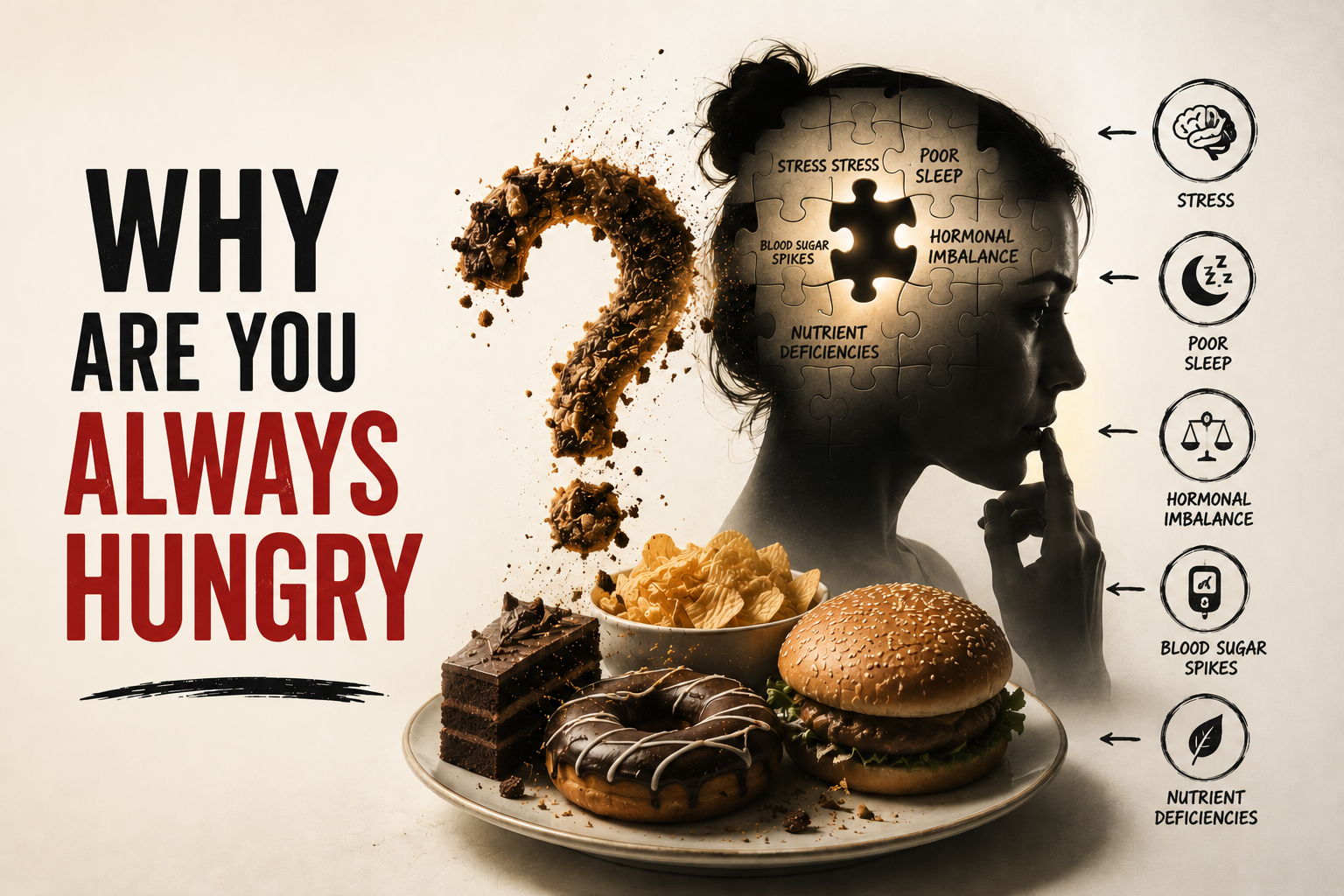

Why Am I Always Hungry?
- Not Every Craving Is Hunger: Constant hunger can stem from physical needs or emotional triggers. Understanding the difference is the first step toward identifying the real cause instead of treating every craving the same way.
- Your Body May Be Sending Important Signals: Frequent hunger can be linked to food choices, hormones, sleep, stress, blood sugar changes, or medical conditions such as diabetes, thyroid disorders, or PCOS, making it important to look beyond willpower.
- Daily Habits Shape Your Appetite: Meal quality, consistent eating patterns, adequate sleep, stress management, and mindful eating all influence how full you feel and how often hunger returns throughout the day.
- Sustainable Changes Help You Stay Satisfied: Building balanced meals, choosing high-fiber and protein-rich foods, making smarter carbohydrate swaps, and selecting filling snacks can improve satiety and support better appetite control over time.
You finish a full plate of dal, rice, and sabzi at lunch, but by 4 PM you’re already reaching for biscuits with your evening tea. If this happens often, you’re not alone. Constant hunger is rarely just about eating too little. It can be influenced by your diet, sleep, stress, hormones, blood sugar, or an underlying health condition.
Having worked with more than 1,000 business owners, Kapiil Guptta has found that frequent hunger is often a sign that the body isn’t getting what it needs to stay satisfied. In this blog, you’ll learn the most common reasons behind constant hunger and practical, science-backed ways to stay fuller for longer with an Indian diet and lifestyle.
What Does “Always Hungry” Actually Mean?
Constant hunger is different from the appetite you naturally experience before breakfast, lunch, or dinner. If you’re reaching for snacks shortly after every meal, waking up hungry in the middle of the night, or never feeling satisfied no matter how much you eat, your body may be responding to factors beyond an empty stomach. Food choices, sleep, stress, hormones, blood sugar, and certain medical conditions can all influence how hungry you feel.
The first step toward finding the cause is understanding what kind of hunger you’re experiencing.
Physical Hunger vs. Emotional Hunger
Not every craving means your body needs food. Sometimes your stomach is asking for nourishment. At other times, your brain is responding to stress, boredom, habit, or emotions. Learning to tell the difference can help you make better decisions around food.
| Physical Hunger | Emotional Hunger |
| Develops gradually over time | Comes on suddenly |
| Usually starts a few hours after eating | Can happen even after a full meal |
| Almost any balanced meal sounds satisfying | Cravings are often for specific foods like sweets or chips |
| Stops when you’re comfortably full | May continue even after overeating |
| Leaves you feeling satisfied after eating | Often followed by guilt or regret |
If it’s physical hunger, your body is likely asking for energy because of unbalanced meals, low protein or fiber intake, long gaps between meals, or blood sugar fluctuations. If it’s emotional hunger, the urge to eat is often triggered by stress, boredom, fatigue, or habit rather than a true need for food. Once you identify the type of hunger you’re experiencing, you can focus on the real cause instead of simply reaching for another snack.
Kapiil Guptta has noticed that many people mistake stress, long work hours, or mental exhaustion for hunger. Once the root cause is addressed, whether it’s an unbalanced meal or a demanding work routine, cravings often become much easier to manage.
When Could Constant Hunger Be a Warning Sign?
Feeling hungry before your next meal is normal. Feeling hungry all the time, especially when it’s accompanied by other symptoms, may be a sign that your body needs medical attention. Doctors refer to excessive hunger as polyphagia, which can sometimes be linked to conditions such as diabetes, thyroid disorders, or certain medications.
Watch for these six warning signs:
- You feel hungry even after eating a full meal.
- You’re eating more than usual but still losing weight.
- You feel constantly thirsty.
- You’re urinating more frequently than normal.
- Your hunger is affecting your daily routine or sleep.
- You experience persistent fatigue along with increased appetite.
If you notice one or more of these symptoms, it’s important to speak with a healthcare professional rather than trying to manage the hunger on your own. Identifying the underlying cause early can make treatment much more effective.
Which Food Habits Keep You Hungry?
The food on your plate may fill your stomach without giving your body what it needs to stay satisfied. Meals that lack protein, fiber, or balance can leave you searching for snacks long before your next meal. Here are some of the most common food-related reasons behind constant hunger.
Meals Don’t Have Enough Protein
Protein takes longer to digest than carbohydrates and plays an important role in keeping you full after a meal. It also influences hormones that regulate appetite, which is why meals with enough protein tend to reduce unnecessary snacking.
This may be affecting you if you:
- Feel hungry within two or three hours of eating.
- Usually start your day with tea, biscuits, poha, or toast alone.
- Rarely include eggs, paneer, curd, tofu, dal, or sprouts in breakfast.
- Experience strong evening cravings.
One of the most common eating patterns in people is a carbohydrate-heavy breakfast with very little protein. For many, adding a protein source to their first meal of the day has helped reduce afternoon hunger and improve energy without changing the amount of food they eat.
Meals Have Too Many Refined Carbs
Foods made with refined grains, such as white bread, maida products, or polished white rice, digest quickly and provide energy for a short time. They often cause blood sugar to rise rapidly before dropping again, which can leave you feeling hungry even though you’ve eaten enough calories.
This may be affecting you if you:
- Feel sleepy after meals.
- Crave something sweet soon after eating.
- Depend on white bread, bakery items, or refined grains every day.
- Need frequent snacks to stay energized.
One client came to Kapiil Guptta because he couldn’t stop eating throughout the afternoon despite having regular meals. Instead of cutting calories, his meals were rebuilt with dal, vegetables, and whole grains. As his meals became more balanced, the urge to snack gradually reduced because he stayed full for longer.
Meals Are Low in Fiber
Fiber slows digestion and helps food stay in the stomach for longer, which increases fullness after eating. It also supports healthy blood sugar levels and plays an important role in gut health.
This may be affecting you if you:
- Rarely include vegetables with your meals.
- Eat very little fruit during the day.
- Choose refined grains more often than whole grains.
- Often finish meals without feeling completely satisfied.
Foods such as vegetables, dal, fruit, salads, legumes, and millets naturally increase fiber intake. Research consistently shows that diets rich in fiber are associated with greater fullness and better blood sugar regulation, both of which can help reduce frequent hunger.
Not Drinking Enough Water
Your brain can sometimes confuse thirst with hunger because both signals originate from similar areas involved in maintaining the body’s balance. As a result, you may reach for food when what your body actually needs is water.
This may be affecting you if you:
- Forget to drink water during the day.
- Notice a dry mouth.
- Experience mild headaches.
- Have dark yellow urine.
- Feel better after drinking water.
Kapiil Guptta often encourages clients to pause before reaching for a snack and drink a glass of water first. Waiting for about 20 minutes can help you determine whether your body was asking for food or simply needed better hydration.
Which Everyday Habits Increase Hunger?
Even if you’re eating nutritious foods, your daily routine can influence how hungry you feel. Habits such as poor sleep, chronic stress, rushed meals, and irregular eating patterns can interfere with your body’s natural appetite signals.
Not Getting Enough Sleep
Sleep plays an important role in regulating appetite. Research shows that getting too little sleep increases ghrelin, the hormone that stimulates hunger, while reducing leptin, the hormone that signals fullness. This combination can leave you feeling hungrier throughout the day.
Kapiil Guptta has seen this pattern in many business owners who stay up late working, rely on tea to start the day, and struggle with sugar cravings by the afternoon. Improving sleep consistency often helps reduce cravings before any major changes are made to the diet.
Stress
When you’re under stress, your body releases cortisol, a hormone that can increase appetite and make you crave foods that are high in sugar or refined carbohydrates. For many people, eating becomes a way to cope with emotional or mental fatigue rather than physical hunger.
This is why managing stress is just as important as improving your diet. Along with nutrition, Kapiil Guptta encourages practices such as breathing exercises, regular movement, and structured daily routines to help reduce stress-driven cravings.
Eating Too Fast
Your stomach and brain don’t communicate instantly. It takes about 20 minutes for your brain to receive signals that you’ve eaten enough. When you eat too quickly, it’s easy to consume more food before your body recognizes that you’re full.
If you often finish meals in a hurry, eat while working, or rarely chew your food properly, slowing down can make a noticeable difference. Eating without screens, chewing thoroughly, and taking short pauses during meals can help you recognize fullness sooner.
Skipping Meals
Skipping breakfast or delaying lunch may seem like a way to eat less, but it often has the opposite effect. Going for long periods without food can increase hunger, making it more likely that you’ll overeat or crave high-calorie snacks later in the day.
One business owner working with Kapiil Guptta regularly skipped lunch because of back-to-back meetings. Once he started eating balanced meals at consistent times, his evening binge eating reduced, and he noticed steadier energy throughout the workday.
Can Medical Conditions Cause Constant Hunger?
Most cases of frequent hunger are linked to food choices or daily habits. However, if you feel constantly hungry despite eating balanced meals, it may be a sign of an underlying medical condition. Identifying the cause early can help you receive the right treatment and prevent future health complications.
Diabetes and Prediabetes
One of the early signs of diabetes or prediabetes is feeling unusually hungry, even after eating. This happens because glucose remains in the bloodstream instead of being used effectively by the body’s cells for energy.
If constant hunger is accompanied by excessive thirst, frequent urination, blurred vision, or unexplained weight loss, it’s important to consult a healthcare professional. A simple blood sugar test can help determine whether diabetes or prediabetes is the cause.
An Overactive Thyroid
An overactive thyroid, also known as hyperthyroidism, speeds up your body’s metabolism. As a result, your body burns energy faster than usual, which can make you feel hungry more often.
Other common symptoms include unexplained weight loss, a rapid heartbeat, anxiety, excessive sweating, and trouble sleeping. If you experience these symptoms along with persistent hunger, speak to your doctor for further evaluation.
PCOS
Polycystic Ovary Syndrome (PCOS) affects many women in India and is often linked to insulin resistance. This can lead to frequent hunger, strong cravings, and difficulty managing weight.
If you have irregular periods, acne, excess facial hair, or persistent hunger, it’s important to consult a gynecologist or endocrinologist. Early diagnosis and treatment can help improve both hormone balance and appetite regulation.
Could Your Medicines Be Increasing Your Appetite?
Some medications can increase appetite as a side effect. These include certain steroids, antidepressants, and some diabetes medicines, which may make you feel hungrier than usual.
If you’ve noticed a change in your appetite after starting a new medication, discuss it with your doctor. Never stop or change a prescribed medicine without medical advice, as doing so may affect your treatment.
Which Hormones Make You Feel Hungry?
Your appetite is not controlled by your stomach alone. Hormones constantly communicate with your brain about when to eat and when to stop. When these signals become disrupted, you may feel hungry more often, crave certain foods, or struggle to stay full after meals.
Insulin
Insulin helps move glucose from your blood into your cells, where it is used for energy. When the body becomes resistant to insulin, glucose stays in the bloodstream instead of entering the cells efficiently. Even after eating, your body may continue sending hunger signals because the cells are not getting the energy they need.
South Asians have a higher risk of insulin resistance and type 2 diabetes than many other populations, often at a younger age and lower body weight. Having worked with more than 1,000 business owners, Kapiil Guptta has found that frequent hunger, low energy, and afternoon cravings are often linked to early signs of poor blood sugar control rather than simply eating too little.
Gherlin and Leptin
Two hormones play a key role in controlling appetite. Ghrelin tells your brain it’s time to eat, while leptin signals that you’ve had enough. When these hormones are working well, they help regulate hunger and fullness throughout the day.
Poor sleep, chronic stress, and excess body fat can disrupt this balance. As a result, you may feel hungry more often, struggle to recognize when you’re full, and experience stronger cravings even after eating a satisfying meal.
Blood Sugar
After a balanced meal, blood sugar rises gradually and provides a steady supply of energy. Meals high in refined carbohydrates or added sugar can cause a rapid spike followed by a sharp drop, making you feel hungry again much sooner.
These blood sugar swings often leave you feeling sleepy after meals, craving sweets in the afternoon, or reaching for another snack within a few hours. Research shows that meals containing protein, fiber, and healthy fats help keep blood sugar more stable, which supports better appetite control and longer-lasting fullness.
How to Reduce Hunger Naturally?
If you’re constantly hungry, the solution is rarely to eat less. In many cases, it’s about eating in a way that keeps your body satisfied for longer. The right combination of foods, consistent meal timings, and simple daily habits can help reduce unnecessary hunger without following restrictive diets or cutting out entire food groups.
Build a Balanced Indian Plate
One of the biggest reasons people feel hungry soon after eating is that their meals are heavily focused on carbohydrates while lacking enough protein, vegetables, and healthy fats. A balanced plate slows digestion, provides a steady release of energy, and helps regulate the hormones that control hunger.
Research consistently shows that meals containing protein, fiber, and healthy fats increase satiety more effectively than meals made up mostly of refined carbohydrates. Rather than counting calories, focus on building meals that naturally keep you full.
A simple way to build every meal:
- ½ plate: Non-starchy vegetables such as sabzi, leafy greens, cucumber, tomato, carrots, or salad.
- ¼ plate: Protein such as dal, paneer, eggs, curd, tofu, fish, chicken, or sprouts.
- ¼ plate: Complex carbohydrates such as whole wheat roti, brown rice, hand-pounded rice, or millets.
- Healthy fats: Add a small serving of nuts, seeds, peanut chutney, or a teaspoon of ghee.
Choose Better Carbohydrates
Carbohydrates are not the enemy. They are your body’s preferred source of energy. The problem is that refined carbohydrates digest quickly, causing blood sugar to rise and fall rapidly. This often leaves you feeling hungry again within a few hours.
Choosing carbohydrates that digest more slowly helps provide sustained energy and improves satiety. These foods also contain more fiber, vitamins, and minerals than their refined counterparts.
| Instead of | Choose | Why it helps |
| White rice | Brown rice, hand-pounded rice, or millets | Higher in fiber and digests more slowly |
| Maida roti or naan | Whole wheat or multigrain roti | Supports steadier blood sugar |
| White bread | Whole grain bread | Keeps you full for longer |
| Sugary breakfast cereals | Oats or unsweetened muesli | Rich in fiber and more satisfying |
| Bakery snacks | Roasted chana or sprouts | Provides protein along with fiber |
The goal isn’t to eliminate carbohydrates from your diet. Instead, choose sources that provide lasting energy instead of quick spikes followed by hunger.
Eat on a Consistent Schedule
Your body functions best when meals follow a regular pattern. Eating at different times every day or skipping meals can disrupt your internal body clock, also known as the circadian rhythm, making it harder to regulate hunger and fullness.
Many business owners delay meals because of meetings or deadlines, only to find themselves overeating late in the evening. Establishing a predictable eating schedule helps your body anticipate meals, supports stable blood sugar levels, and reduces impulsive snacking.
Five simple habits that can help:
- Eat breakfast within a couple of hours of waking up.
- Avoid skipping lunch because of work.
- Keep a gap of around 3 to 5 hours between meals.
- Plan healthy snacks if long meetings delay a meal.
- Try to eat dinner at a similar time each evening.
Small changes in meal timing are often easier to maintain than restrictive diets and can have a meaningful impact on appetite regulation.
Choose Snacks That Keep You Full
A snack should help you stay satisfied until your next meal, not leave you hungry again after thirty minutes. Snacks that combine protein with fiber or healthy fats slow digestion and provide more lasting fullness than foods made mostly from refined flour or added sugar.
Instead of reaching for biscuits, namkeen, or packaged snacks, choose foods that nourish your body while supporting stable energy throughout the day.
| Snack | Why it works |
| Roasted chana | High in protein and fiber, making it naturally filling |
| Greek yogurt or curd | Rich in protein and supports gut health |
| Paneer cubes | High-quality protein that keeps hunger away |
| Apple or banana with a handful of nuts | Combines fiber with healthy fats for sustained energy |
| Sprouts chaat | Provides protein, fiber, and important micronutrients |
| Boiled eggs | One of the most filling sources of protein |
| Buttermilk | Hydrating and pairs well with light meals |
| Roasted makhana | A better alternative to fried snacks when eaten in moderation |
Rather than asking whether a snack is low in calories, ask whether it will keep you satisfied until your next meal. Choosing foods that provide protein, fiber, or healthy fats can make a significant difference in controlling hunger throughout the day.
Conclusion
Constant hunger is your body’s way of telling you that something needs attention. It may be linked to your eating habits, sleep, stress, hormones, or an underlying health condition. Instead of ignoring it or relying on willpower, focus on identifying the root cause and making small, sustainable changes that support long-term health.
If you’re struggling with frequent hunger, low energy, or cravings that don’t seem to improve, Kapiil Guptta can help you uncover what’s driving these symptoms. Having guided more than 1,000 business owners toward better metabolic health, he takes a root-cause approach to nutrition and lifestyle, helping you build habits that keep you energized, satisfied, and healthy for the long run.
Frequently Asked Questions
Why do I feel hungry all the time?
Constant hunger is often caused by not eating enough protein, lack of sleep, or high stress levels.
Is it normal to be hungry every 3 hours?
Yes, feeling hungry every 3 to 4 hours is perfectly normal. It takes about this long for your stomach to digest a meal and for blood glucose levels to naturally settle. Eating smaller, more frequent meals can be a great way to stabilize your energy throughout the day.
How do I stop constant hunger?
To stop feeling hungry constantly, prioritize meals centered around lean protein, high-fiber vegetables, and healthy fats. These slow digestion and stabilize your blood sugar, preventing the rapid crashes that trigger hunger hormones.
What illness causes frequent hunger?
Several medical conditions and illnesses cause extreme or constant hunger (polyphagia), notably diabetes, hyperthyroidism, and hypoglycemia. While most common illnesses like the flu usually make you lose your appetite, specific metabolic and hormonal disorders trick your body into feeling starved.
Why am I so hungry even if I ate a lot?
There are many reasons you may always feel hungry. These include a drop in your blood sugar, a lack of sleep, or medications that increase your appetite. If you still feel hungry after eating a meal, this could be because you aren’t eating the right amount or type of foods.
Read More: The Truth About Intermittent Fasting for Indians
Follow Kapiil Gupta on Instagram for practical health tips, executive wellness strategies, and evidence-based guidance to improve your energy, leadership, and business performance.
Instagram: https://instagram.com/kapiilguptta

Leave a Reply