

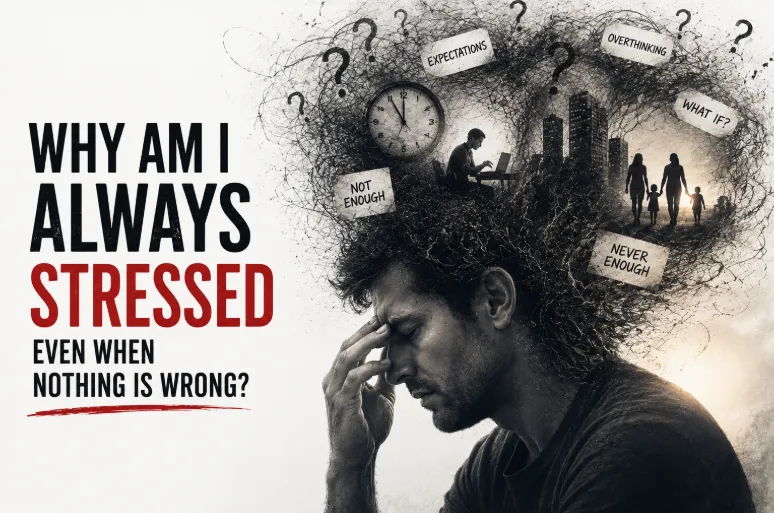

Why Am I Always Stressed Even When Nothing Is Wrong? 8 Hidden Causes & Solutions
- Stress Can Persist Without an Obvious Problem: Feeling stressed even when life seems stable is common, as chronic stress can continue after the original challenge has passed when the nervous system remains on high alert.
- Stress Has Multiple Root Causes: Ongoing stress is often shaped by a combination of biological factors, past experiences, lifestyle habits, digital overload, emotional suppression, and everyday social or financial pressures rather than a single trigger.
- The Signs Go Beyond Feeling Worried: Chronic stress can affect the body and mind through fatigue, poor sleep, digestive issues, difficulty concentrating, irritability, emotional exhaustion, and the feeling of being “wired but tired.”
- Recovery Comes From Restoring Balance: Managing stress involves supporting your nervous system through quality sleep, healthy routines, emotional awareness, recovery practices, and seeking professional help when symptoms become persistent or overwhelming.
Nothing seems to be wrong, yet you still feel stressed. Work is manageable, your family is doing okay, even then, you wake up feeling tense, react strongly to small inconveniences, struggle to relax, and end the day mentally exhausted. If you have ever wondered, “Why am I stressed when everything is fine?” you are not alone. Many people experience ongoing stress without being able to identify a single obvious reason.
In this blog, you will learn why stress can persist even when life seems stable, how to recognise the signs that your body and mind may be under chronic stress, the biological, psychological, and lifestyle factors that contribute to it, and practical, evidence-informed strategies that can help you better manage stress and support your overall wellbeing.
When Does Stress Become a Problem?
Stress is often seen as something negative, but that is not always the case. In fact, a certain amount of stress is a normal and helpful part of life. According to the American Psychological Association, stress is a natural physiological and psychological response that helps the body react to challenges and demands.
Healthy stress, known as eustress, prepares your body and mind to perform at their best during important moments. You might experience it before a job interview, while preparing for a wedding, during a sports competition, or before speaking in front of an audience. This type of stress is usually short-lived, gives you a sense of purpose, and fades once the situation has passed.
On the other hand, distress is the kind of stress that affects your well-being. It often develops when challenges feel constant, overwhelming, or beyond your ability to cope with. Ongoing work deadlines, family conflicts, financial uncertainty, caregiving responsibilities, or persistent worry can keep your body in a prolonged state of alertness. When stress becomes chronic, the body continues releasing stress hormones such as cortisol for longer than intended. Research has linked prolonged activation of the stress response with poorer sleep, impaired concentration, changes in mood, reduced immune function, and an increased risk of several chronic health conditions.
The key difference is that healthy stress has a beginning and an end. It helps you adapt to a challenge and then allows your body to recover. Chronic stress does not switch off so easily. It can remain in the background even after life becomes calmer, making you feel tense or exhausted despite having no immediate problem to solve.
What Does Chronic Stress Actually Look Like?
Chronic stress does not always feel like panic or overwhelming worry. In many cases, it develops gradually, and the signs become so familiar that people assume they are simply part of a busy life. Because the body’s stress response affects multiple systems, chronic stress can influence your physical health, emotional wellbeing, thinking patterns, and behaviour.
Physical Signs
If your body has been under prolonged stress, you may notice these five physical signs:
- Persistent fatigue: You feel drained throughout the day, even after getting enough sleep.
- Muscle tension and headaches: Tightness in the shoulders, neck, or jaw, along with frequent tension headaches, can be linked to prolonged stress.
- Digestive discomfort: Bloating, acidity, constipation, diarrhoea, or other digestive issues may occur because stress affects the gut-brain connection.
- Poor sleep: Difficulty falling asleep, waking up frequently, or not feeling refreshed in the morning are common signs of an overactive nervous system.
- Frequent illnesses: Long-term stress may weaken immune function, making you more susceptible to infections or slowing recovery.
Mental Signs
Stress also changes how you think, feel, and respond to everyday situations. You may notice these five signs without recognising them as stress:
- Feeling irritable: Small inconveniences trigger stronger reactions than they normally would.
- Difficulty concentrating: Staying focused, making decisions, or remembering simple things becomes harder.
- Constant worrying: Your mind repeatedly jumps to worst-case scenarios, even when there is no immediate problem.
- Loss of motivation: Tasks that once felt manageable begin to feel overwhelming or exhausting.
- Withdrawing from others: You avoid social interactions or stop making time for activities and self-care because you feel mentally depleted.
Is It Really Stress or Is It Anxiety?
Stress and anxiety are often used interchangeably, but they are not the same. Both can make you feel overwhelmed, restless, or exhausted, and many of their physical symptoms overlap. However, understanding the difference can help you recognise what you are experiencing and decide when it may be helpful to seek professional support.
| Stress | Anxiety |
| Usually develops in response to an identifiable situation or challenge, such as work deadlines, financial problems, or family conflict. | May occur even when there is no obvious trigger or immediate threat. |
| Often reduces once the stressful situation is resolved or becomes more manageable. | Can persist even after the original problem has passed or when everything appears to be fine. |
| Primarily involves responding to a current challenge. | Often involves excessive worry, anticipation, or fear about future events, even when the likelihood of those events is low. |
| Symptoms may include muscle tension, headaches, irritability, fatigue, difficulty sleeping, and trouble concentrating. | Can cause many of the same symptoms as stress, along with persistent nervousness, racing thoughts, restlessness, and, in some cases, panic attacks. |
| Stress management techniques and lifestyle changes often help once the trigger is addressed. | Anxiety may also benefit from lifestyle changes, but persistent or severe anxiety often requires assessment and treatment by a qualified mental health professional. |
It is important to remember that stress and anxiety can overlap. Long-term stress may increase the risk of developing an anxiety disorder in some individuals, while anxiety itself can make everyday situations feel more stressful. If your symptoms are persistent, interfere with daily life, or continue even after the stressor has resolved, it is important to speak with a qualified healthcare or mental health professional for an appropriate evaluation.
8 Reasons of Why You Are Stressed When Nothing Is wrong
Feeling stressed even when nothing appears to be wrong is rarely explained by a single cause. Research shows that stress is influenced by the interaction between your brain, hormones, physical health, daily habits, past experiences, and environment. Understanding these factors can help you identify what may be contributing to your stress and guide you towards appropriate lifestyle changes or medical support when needed.
1. A Nervous System Stuck in Survival Mode
Your body’s stress response is designed to protect you from danger. When your brain perceives a threat, it activates the fight-or-flight response by releasing stress hormones such as adrenaline and cortisol. Under normal circumstances, this response settles once the threat has passed. However, repeated or prolonged stress can make your nervous system more reactive over time.
Five signs this may be happening include:
- Small problems feel like major emergencies.
- You constantly expect something to go wrong.
- You find it difficult to relax, even during holidays or weekends.
- You feel restless or “on edge” without an obvious reason.
- Your body reacts strongly to everyday challenges.
Sometimes the real issue is not today’s situation. After months or years of living under pressure, your nervous system can begin to expect danger even when you are safe, making calm feel unfamiliar.
2. Unprocessed Stress From the Past
The brain does not always distinguish between past and present emotional experiences. Research suggests that adverse childhood experiences, unresolved trauma, and prolonged burnout can influence how the nervous system responds to stress later in life.
Common contributors include:
- Difficult childhood experiences.
- Emotional neglect.
- Workplace burnout that was never fully addressed.
- Significant personal losses or trauma.
- Stress responses that became learned patterns over time.
These experiences do not mean you will always feel stressed, but they may increase your sensitivity to future challenges.
3. Hormonal and Physical Imbalances
Stress is not always psychological. Several medical conditions and nutritional deficiencies can produce symptoms that resemble stress or make your body more vulnerable to it.
Potential contributors include:
- Cortisol dysregulation.
- Thyroid disorders.
- Blood sugar fluctuations.
- Vitamin B12 deficiency.
- Vitamin D deficiency.
- Iron deficiency.
- Menopause or perimenopause.
- Polycystic ovary syndrome (PCOS).
- Chronic inflammation.
If your stress is accompanied by persistent fatigue, unexplained weight changes, dizziness, or other ongoing physical symptoms, it is important to consult a qualified healthcare professional rather than assuming stress is the only cause.
4. The Gut-Brain Connection
Scientists describe the connection between your digestive system and brain as the gut-brain axis. Research suggests that changes in gut health can influence mood and stress responses, while chronic stress can also affect digestion and the balance of gut bacteria.
Possible signs include:
- Frequent bloating.
- Indigestion.
- Irritable bowel syndrome (IBS) symptoms.
- Gut inflammation.
- Changes in bowel habits.
- Nutrient absorption issues.
Supporting gut health may play an important role in overall wellbeing, although it is only one piece of the larger picture.
5. Lifestyle Habits Keep Body on High Alert
Your daily routine can either support recovery from stress or make it more difficult for your nervous system to switch off. Even without a major life event, certain habits may keep your body in a prolonged state of alertness.
Lifestyle factors include:
- Poor sleep quality.
- Excess caffeine.
- Physical inactivity.
- Sitting for prolonged periods.
- Overworking without recovery.
- Constant multitasking.
- Skipping meals.
- Frequent alcohol consumption.
- A diet lacking essential nutrients.
These habits may seem small individually, but together they can influence how resilient your body is to everyday stress.
6. Digital Overload and a Never-Resting Brain
Modern life provides very few opportunities for the brain to disengage. Constant digital stimulation keeps your attention switching between tasks and information throughout the day.
Eight common digital stressors include:
- Social media comparison.
- Doomscrolling.
- Frequent notifications.
- Work emails and messages after office hours.
- Information overload.
- LinkedIn career comparison.
- Family WhatsApp groups discussing achievements.
- Fear of missing out (FOMO).
7. Suppressed Emotions and Emotional Masking
Many people are taught to stay strong, avoid conflict, or hide difficult emotions. While this may help temporarily, repeatedly suppressing emotions can increase psychological distress over time.
This may look like:
- Saying “I’m fine” when you are not.
- Putting everyone else’s needs before your own.
- Avoiding difficult conversations.
- Never expressing anger or disappointment.
- Bottling up grief or sadness.
- Feeling uncomfortable asking for help.
Healthy emotional expression does not mean reacting impulsively. It means recognising emotions, understanding them, and responding in constructive ways.
8. High-Functioning Anxiety
Some people continue performing well at work and fulfilling responsibilities while experiencing significant internal distress. Although high-functioning anxiety is not a formal medical diagnosis, mental health professionals commonly use the term to describe this pattern.
You may relate to this if you:
- Constantly overthink your decisions.
- Strive for perfection in everything.
- Feel guilty when resting.
- Find it difficult to switch off after work.
- Stay busy to avoid uncomfortable thoughts.
- Worry excessively about making mistakes.
- Appear confident while feeling emotionally exhausted.
Because people with high-functioning anxiety often seem successful from the outside, their struggles may remain unnoticed for years, delaying the support they need.
Why Is Indian Lifestyle Increasingly Stressful?
Not every source of stress comes from a major life event. Sometimes, it is the constant pressure of everyday responsibilities, expectations, and social norms that slowly wears you down. These stressors may not feel dramatic at the moment, but when they continue for months or years, they can keep your nervous system in a prolonged state of alertness. In India, cultural, financial, and family responsibilities often add another layer of stress that many people consider “normal,” even though they can significantly affect mental and physical wellbeing.
“Log Kya Kahenge?” Mentality
Many people grow up hearing the phrase, “Log kya kahenge?” While concern for social relationships is a natural part of living in a community, constantly worrying about how others perceive your choices can become emotionally exhausting. Decisions about your career, marriage, appearance, parenting, finances, or lifestyle may begin to revolve around avoiding criticism rather than following your own values.
Research in psychology has shown that fear of negative evaluation and excessive concern about social judgement are associated with higher levels of stress, anxiety, and emotional distress. When you constantly monitor how others might react, your brain remains alert for criticism, making it difficult to truly relax.
Joint Family Responsibilities
Living in a joint family offers emotional support, shared responsibilities, and a strong sense of belonging. At the same time, it can also create situations where personal boundaries become difficult to maintain. Caring for ageing parents, making family decisions, balancing multiple expectations, and having limited personal space may leave very little time for rest or self-care.
One of Kapiil Guptta’s clients at WAYDA, Aniket, experienced exactly this. On paper, everything seemed fine. His business was stable, his family was supportive, and there were no major financial concerns. Yet he constantly felt overwhelmed and mentally exhausted. Through our assessments and coaching conversations, we discovered that the root of his stress was not work but the continuous emotional responsibility he carried within his joint family.
Once he recognised this pattern, we helped him build healthier routines, create small moments of personal recovery, and regulate his daily stress response. Understanding the root cause, rather than simply managing the symptoms, made a meaningful difference in how he felt.
Financial Pressure
Financial stress is not limited to people facing a crisis. For many households, it comes from managing recurring responsibilities such as EMIs, rising living costs, supporting parents, children’s education, healthcare expenses, and planning for the future. Even when income is stable, the constant need to balance competing financial priorities can create a persistent sense of uncertainty.
Research consistently shows that financial insecurity is associated with higher levels of psychological distress and poorer mental wellbeing. The emotional impact often comes not from a single expense but from the ongoing responsibility of ensuring that every financial commitment is met month after month.
Career Pressure
Today’s professional environment makes comparison almost unavoidable. Promotions shared on LinkedIn, success stories in WhatsApp groups, rapidly changing industries, and the pressure to continuously achieve can create the feeling that everyone else is moving ahead faster than you. Entrepreneurs face additional uncertainty, balancing business growth with financial risk and responsibility for employees and their families.
This constant comparison can shift your attention away from your own progress and towards measuring yourself against others. Over time, the pressure to keep up, earn more, or achieve the next milestone can become a chronic source of stress, even when your own career is progressing well.
What Actually Helps Reduce Stress?
There is no single habit, supplement, or technique that can eliminate stress overnight. Research shows that managing chronic stress usually requires a combination of healthy lifestyle habits, emotional awareness, and, when needed, professional support. The goal is not to remove every source of stress but to help your body recover more effectively and become more resilient over time.
Sleep Before Self-Help
Sleep is one of the most powerful ways your brain and body recover from stress. During sleep, stress hormone levels naturally decline, memories are processed, and the nervous system has an opportunity to reset. Poor sleep, on the other hand, can make everyday challenges feel more overwhelming.
Three simple habits that may help include:
- Avoid using your phone or other bright screens for at least one hour before bed.
- Go to bed and wake up at roughly the same time every day, including weekends.
- Spend a few minutes in natural morning sunlight to support your body’s internal clock.
Teach Your Body That It Is Safe
Your nervous system responds not only to your thoughts but also to the signals your body receives throughout the day. Activities that encourage slow, controlled movement and relaxation may help shift the body from a state of alertness towards recovery.
Five evidence-informed practices include:
- Slow breathing exercises.
- Mindfulness meditation.
- Yoga.
- Spending time in nature.
- Gentle walks, especially outdoors.
Regular practice is often more effective than doing these activities only during periods of high stress.
Reduce Your Sense of Constant Urgency
Many people unknowingly teach their nervous system that everything is an emergency. Constant rushing, multitasking, and feeling pressed for time can reinforce the body’s stress response, even when there is no immediate danger.
Here are five small changes that can make a difference:
- Eat your meals without rushing.
- Walk at a comfortable pace instead of hurrying everywhere.
- Speak a little slower during conversations.
- Leave a few minutes earlier instead of constantly racing against the clock.
- Build short pauses into your day between tasks.
These habits repeatedly signal to your brain that you are safe and do not need to remain in survival mode.
Write Down Tomorrow Before Going to Bed
If your mind becomes most active at night, it may be trying to remember unfinished tasks. Writing down what needs to be done tomorrow can reduce this mental load by reassuring your brain that important responsibilities will not be forgotten.
Try writing down these four things:
- Your most important tasks for tomorrow.
- Anything that is worrying you.
- Decisions that can wait until the next day.
- A simple plan for the morning.
This practice is sometimes called a “brain dump” and may help some people fall asleep more easily by reducing repetitive thoughts.
Create More Calming Moments in Your Day
Recovery is not only about sleeping more. Activities that you genuinely enjoy can provide your brain with opportunities to relax and shift attention away from ongoing stressors.
Consider making time for:
- Reading.
- Listening to music.
- Gardening.
- Creative hobbies such as painting or crafts.
- Spending quality time with family over meals.
- Any hobby that helps you feel present and engaged.
Even short periods of enjoyable activity can contribute to emotional wellbeing when practised consistently.
Practice Small Self-Care Habits That May Help You Relax
Many bedtime rituals have not been studied as extensively as sleep, exercise, or mindfulness, and their effects can vary from person to person. However, if you find them calming, they may become part of a relaxing evening routine.
Some people find comfort in:
- A gentle foot massage or applying oil before bed.
- A warm bath or shower.
- Drinking a caffeine-free herbal tea.
- Light stretching.
- A few minutes of slow, deep breathing.
While these practices are not guaranteed treatments for chronic stress, they may help create a sense of relaxation and signal to your body that it is time to unwind.
Conclusion
Stress is not always a sign that something is wrong with your life. Sometimes, it is a sign that your body and mind have been carrying pressure for longer than they were designed to. Understanding the root cause of your stress is the first step towards making meaningful and lasting changes instead of simply coping with the symptoms.
If you have been feeling constantly stressed, exhausted, or unable to switch off despite trying on your own, you do not have to navigate it alone. At WAYDA, Kapiil Guptta, health coach for business owners, we help you identify the underlying factors contributing to your stress and create practical, sustainable strategies that support your physical and mental wellbeing. Taking the first step today could help you build a calmer, healthier, and more resilient tomorrow.
Frequently Asked Questions
Why do I feel stressed even though nothing’s wrong?
Stress can linger even when your life feels calm because your brain is reacting to hidden physical triggers or an accumulated buildup of daily habits. The National Institute of Mental Health notes that physical stress often stems from physiological or internal sources.
What are 5 signs of stress overload?
Stress overload happens when the demands on your life exceed your capacity to cope. While individual responses vary, the most common warning signs include chronic fatigue, sudden irritability, persistent sleep issues, brain fog, and physical tension.
Why do I stress when I do nothing?
Thus, being less productive or doing nothing, even if only for a few days, can lead to feelings of inadequacy. Having free time might also make you feel like you are missing out on some important tasks or experiences, leading to increased anxiety.
Why am I getting so stressed so easily?
Stressful feelings typically happen when we feel we do not have the resources to manage the challenges we face. Pressure at work, school or home, illness, or difficult or sudden life events can all lead to stress. Possible causes of stress include: our genes, upbringing and experiences as children or adults.
What happens if your body is under stress for too long?
Chronic stress keeps your body in a prolonged “fight-or-flight” state, flooding your system with adrenaline and cortisol. Over time, this overexposure wreaks havoc on your physical and mental health by elevating blood pressure, increasing inflammation, and weakening your immune system.
👉 Read More: The Truth About Intermittent Fasting for Indians
Follow Kapiil Gupta on Instagram for practical health tips, executive wellness strategies, and evidence-based guidance to improve your energy, leadership, and business performance.
👉 Instagram: https://instagram.com/kapiilguptta

Leave a Reply